Game Rules
Everything you need to play — select your player count for tailored rules.
Quick Start Guide
New to 7 Wonders? Here's all you need to start playing in 2 minutes.
 Shields with each neighbour. Win = +1/+3/+5 VP, Lose = −1 VP, Tie = 0.
Overview
7 Wonders is a card-drafting game for 2–7 players spanning three Ages of ancient history. Each player leads a great civilisation and its Wonder, simultaneously developing their city by choosing cards from a shared hand and passing the rest to their neighbour.
The game takes around 30 minutes regardless of player count, because all players act at the same time.
Setup
- Give each player a Wonder board (chosen randomly or by preference) and place it Resource side up.
- Each player takes 3 coins from the bank.
- Separate the cards into three Age decks (I, II, III).
- Remove cards from each Age deck according to player count, then add the appropriate Guild cards to the Age III deck and shuffle:
- Deal 7 cards face-down to each player (plus the Gaïa hand — see below). Players look at their own hand privately.
- The player who most recently visited a museum goes first (or choose randomly). They will be the starting player for card-passing direction.
Deal a third 7-card hand face-down as the Gaïa (dummy player). At the start of each turn, before players choose their cards, flip the top card of the Gaïa hand face-up and place it in the discard pile. Then both players simultaneously choose and play their card as normal. The remaining Gaïa cards are passed along with the other hands.
Gaïa cards are never built — they are simply removed from the game each round. This keeps the draft balanced and unpredictable for two players.
Card Types
Every card belongs to one of seven colour-coded types. A card's colour tells you what it does and how it scores.


Turn Structure
The game is played over 3 Ages. Each Age has 6 rounds. In every round, all players act simultaneously:
- Build it — Pay costs (resources or coins) and add it to your city.
- Build a Wonder Stage — Place the card face-down under your Wonder board and advance one stage.
- Sell it — Discard the card and take 3 coins from the bank.
After 6 rounds, only 1 card remains in each hand — this card is discarded face-down.
Then Military Conflict is resolved before moving to the next Age.
Military Conflicts
At the end of each Age, each player compares their total Shield count with each of their two neighbours (left and right) separately.
| Age | Win vs. neighbour | Tie | Loss vs. neighbour |
|---|---|---|---|
| Age I | +1 VP | 0 VP | −1 VP |
| Age II | +3 VP | 0 VP | −1 VP |
| Age III | +5 VP | 0 VP | −1 VP |
Military tokens are kept face-up in front of each player and count toward the final score. A player can earn a maximum of +18 VP and a minimum of −6 VP from military (two neighbours × three ages).
With 2 players each player has only one neighbour, so you compare shields with that single opponent. Maximum military VP becomes +9 VP and minimum is −3 VP.
 Building Your Wonder
Each Wonder board has 3 stages (some expansions have 4). To build a stage, place any card face-down beneath your board and pay the listed resources — the card's own effect is ignored.
Wonder stages can be built in any Age and always in order (I → II → III). You are not required to complete your Wonder.
Scoring
At the end of Age III, players tally all seven scoring categories. The player with the most Victory Points wins. Ties are broken by coins remaining.
| Category | How to Score |
|---|---|
|
Military
|
Sum all Military tokens (can be negative). Won conflicts: +1/+3/+5. Losses: −1 each. |
|
Treasury
|
Every 3 coins you have at game end = 1 VP. Remainder coins are worth nothing. |
|
Wonders
|
Add up the VP printed on each completed Wonder stage. |
|
Civilian
|
Add up the VP printed on all blue cards in your city. |
|
Commerce
|
Some yellow cards score VP based on the number of brown/grey cards in your city or neighbours' cities. |
|
Guilds
|
Purple cards score VP based on conditions — e.g., structures you built, or structures your neighbours built. Read each Guild card carefully. |
|
Science
|
See the Science formula below — the most complex (and rewarding) scoring system. |
🔬 Science Scoring Formula
Science cards show one of three symbols:
 Compass,
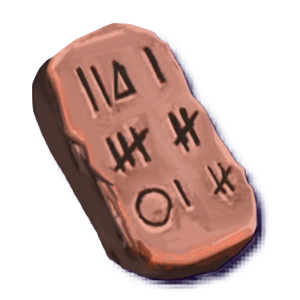 Tablet,
Gear.
Tablet,
Gear.
²
+
²
+
²
+ (complete sets × 7)
A complete set is one of each symbol. Count the minimum across all three symbols to find your sets. Example: 3 Compasses, 2 Tablets, 2 Gears = 2 sets. Score = 3² + 2² + 2² + (2×7) = 9 + 4 + 4 + 14 = 31 VP.
Quick Reference
Key numbers for 3 players:
| Stat | Value |
|---|---|
| Cards dealt per Age | 21 |
| Cards per hand | 7 (always) |
| Rounds per Age | 6 (always) |
| Guild cards in play | 5 |
| Starting coins | 3 (always) |
| Age I military win | +1 VP |
| Age II military win | +3 VP |
| Age III military win | +5 VP |
| Military loss (any Age) | −1 VP |
| Coins per VP (treasury) | 3 coins = 1 VP |
| Sell a card for | 3 coins |
| Default trade cost | 2 coins / resource |
| Max military VP | +18 VP |
| Min military VP | −6 VP |
Hand Pass Direction
| Age I | Age II | Age III |
|---|---|---|
| ⬅ Pass Left | Pass Right ➡ | ⬅ Pass Left |
Most Commonly Forgotten Rules
Even experienced players trip on these. Bookmark this section.
Winning & Tiebreakers
The player with the most Victory Points wins. If two or more players are tied:
- The player with the most coins remaining wins.
- If still tied, the players share the victory.
History & Legacy
Origins
7 Wonders was designed by French game designer Antoine Bauza and first published in 2010 by Belgian publisher Repos Production. It debuted at Essen Spiel, the world's largest board game fair, where it immediately drew long queues and sold out its initial print run.
Bauza's core innovation was deceptively simple: instead of players taking turns one at a time, everyone chooses and plays a card simultaneously. This kept the game to a flat 30 minutes regardless of player count — a near-unheard-of feat for a strategy game at that depth.
Rise to Fame
The awards came quickly. In 2011, 7 Wonders won the prestigious Spiel des Jahres — Germany's "Game of the Year," widely considered the Oscars of the board game world — along with the International Gamers Award and several other honours. A Spiel des Jahres win typically catapults a game into mainstream retail and guarantees translations into dozens of languages.
Within a few years it became one of the best-selling hobby board games ever made, with millions of copies sold worldwide. It held a spot in BoardGameGeek's Top 10 for years and introduced card drafting to an entire generation of players.
Expansions & Spin-offs
The game spawned a full expansion universe:
- Leaders (2011) — adds historical leader cards played at the start of each Age.
- Cities (2012) — introduces a black card type and a diplomatic/espionage layer.
- Babel (2014) — adds communal laws that affect all players each Age.
- Armada (2018) — naval fleets and a new scoring track.
- Edifice (2023) — public construction projects that players race to contribute to.
The most celebrated spin-off is 7 Wonders Duel (2015), co-designed by Bauza and Bruno Cathala. Built from the ground up as a two-player game, it won its own round of awards and is frequently recommended as one of the finest two-player card games ever made.
Antoine Bauza
Bauza went on to design other hit games — most notably Hanabi (cooperative card game, Spiel des Jahres 2013) and Takenoko — cementing his reputation as one of the most versatile designers of his generation. 7 Wonders remains his signature work and the game that defined his career.