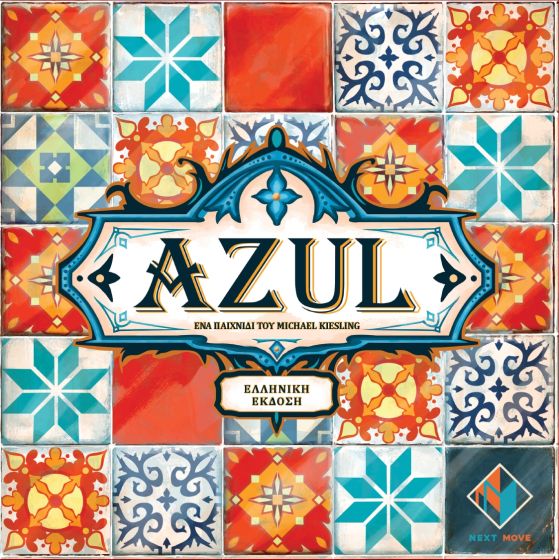
Azul Review
The Most Beautiful Abstract Game You'll Ever Play
Hook / First Impression
The moment you open an Azul box, the game has already won. A hundred heavy resin tiles in five vivid colours tumble into your hands — weighty, cool, satisfying to hold — and even before a single rule has been explained, everyone at the table wants to touch them. That tactile first impression is not an accident. It is the game's thesis: elegance in every detail, from the feel of the tiles to the clarity of the scoring system to the gorgeous tension of watching your opponents draft the exact colour you needed.
Azul won the 2018 Spiel des Jahres — the most prestigious award in board gaming — and it did so because it succeeded at something genuinely difficult: creating a game that is immediately accessible to anyone who can recognise colours, yet strategically deep enough to reward dozens of plays. Four years after its release it remains one of the most universally liked games in the hobby. The question is whether that reputation holds up in practice.
Overview
Azul is a tile-drafting and pattern-building abstract game designed by Michael Kiesling and published by Next Move Games (a Plan B Games brand) in 2017. Inspired by the azulejos — the decorative glazed tiles brought to Portugal by Moorish traders — players compete to fill a five-by-five mosaic wall on their individual player boards, earning points for completed rows, columns, and sets of matching colours.
| At a glance | |
|---|---|
| Designer | Michael Kiesling |
| Publisher | Next Move Games / Plan B Games |
| Year | 2017 |
| Players | 2–4 |
| Play time | 30–45 minutes |
| Age | 8+ |
| Weight | Light-medium (BGG ~1.8/5) |
| Victory condition | Most points when any player completes a full row |
Components & The Setting
The Setting: Players assume the role of artisans commissioned to decorate the walls of the Royal Palace of Évora in Portugal, tiling mosaics with the famous blue-and-white azulejo patterns that still cover Portuguese architecture today. The theme is thin in the mechanical sense — you are placing coloured tiles onto a grid, and no rule requires any knowledge of Portuguese history — but the aesthetic is unusually coherent. The board art, the tile colours (blue, yellow, red, black, and white), and the general visual tone all feel of a piece. Azul is an abstract game that bothers to look like something, and that effort pays dividends at the table.
Components are where Azul earns its reputation. The 100 bakelite tiles are exceptional — thick, smooth, noticeably heavy for their size, and deeply satisfying to handle. They make an audible click when placed on the board, and players who have only ever played games with cardboard tokens are routinely surprised by how much difference physical quality makes to the experience. The circular factory displays (where tiles are drafted from) are sturdy cardboard discs. Player boards are double-sided: one side shows a fixed wall pattern that dictates which colour can go in each space; the other side (introduced in a later edition variant) lets you place any colour anywhere, which increases scoring flexibility and suits experienced players.
The bag for drawing tiles is a simple fabric drawstring pouch — nothing premium, but functional and easy to use. Score markers and the round-marker tile are standard cardboard. The box itself is compact and well-organised, with a plastic insert that holds everything in place. Azul sets up in under two minutes and packs away in three. For a game this good, that friction-free logistics profile matters more than it sounds.
How to Play
The goal is to score the most points by tiling your wall. The game ends at the conclusion of the round in which any player completes at least one full horizontal row on their wall. The player with the most points wins.
Each round has two phases. In the Drafting phase, players take turns picking tiles from the factory displays — circular arrangements of four randomly drawn tiles placed in the centre of the table. On your turn, choose a factory display and take all tiles of one colour from it. The tiles you did not take are moved to the central pool. You may also draft from the central pool, taking all tiles of one colour there — but whoever is the first player to take from the pool that round also takes the first-player marker, which carries a point penalty and determines who goes first next round.
Drafted tiles are placed onto one of the five pattern lines on the left side of your player board. Each pattern line has a fixed capacity (1 to 5 spaces) and can only hold tiles of a single colour. Any tiles you cannot legally place go onto your floor line — a row of negative-point spaces that penalises overreach. Managing what you take, what overflows to the floor, and how you force opponents into bad drafts is the entire game.
In the Tiling phase, any completely filled pattern lines move one tile to the corresponding position on your wall (scoring immediately for adjacent tiles) while the surplus tiles are discarded. Floor-line penalties are applied, score markers are adjusted, and the next round begins. Scoring rewards connected tiles: placing a tile adjacent to others on your wall scores one point per connected tile horizontally and vertically. Completing a full row, column, or set of five matching-colour tiles on the wall earns additional end-game bonus points.
Gameplay Feel
Pacing & Tension: Azul plays with a brisk, satisfying rhythm. Each player's turn is short — pick a factory, place tiles — so downtime between turns is minimal even at four players. Rounds take three to six minutes once players are familiar with the game, and a full session lands reliably at 30–45 minutes. This is a game you finish before anyone gets restless, which is a rarer quality than it sounds.
Tension is constant and usually silent. Every drafting choice carries a cascade of implications: the colour you take denies it from opponents, the factory you empty triggers a ripple of available moves, and the first-player marker is both an advantage (turn order) and a liability (guaranteed floor penalty). In the final two rounds, the board tightens considerably — factory selections feel unavoidable, floor penalties accumulate, and a single tile placement can complete a bonus-scoring column that swings the game.
Player Interaction: Azul is nominally competitive but feels collaborative in the early game when the board is sparse. That tone shifts noticeably in round three or four, when experienced players start drafting deliberately to leave opponents only bad options. This aggressive reading of the board — anticipating what colour your opponent needs and making sure it goes to your floor, not their pattern line — is where Azul's strategic depth lives. Casual players may not notice it happening to them for several sessions; when they do, the game takes on an entirely new dimension.
Luck vs. Strategy Balance: Tiles are drawn randomly from the bag, introducing variance into the factory displays each round. However, this variance is shallow: with 20 tiles of each colour in the game, the distribution is almost always workable, and the drafting phase gives every player multiple options. Azul is far closer to a pure strategy game than its colourful presentation suggests. A skilled player will outperform a casual player consistently, not just over many sessions but often within a single game. The luck element creates variety without deciding outcomes.
Rule Overhead: Negligible. The rules fit on one double-sided sheet and can be explained in under eight minutes including a demonstrated example round. The only consistent teaching stumble is the end-of-round tiling phase — new players sometimes confuse which tiles move to the wall and which are discarded — but one demonstration clears it permanently.
Mechanics Deep-Dive
The Drafting Engine
Azul's drafting mechanism belongs to the draft-and-push family: you take what you want, and your discards become someone else's problem. What makes it exceptional is the compulsory take. You cannot take just one tile of a colour — you must take all tiles of that colour from the display you select. This single rule transforms what would otherwise be a mild pick-and-place puzzle into a genuine weapon system. The art of Azul is engineering drafts that leave only poisons for your opponents: factories that contain only colours they cannot use, or only quantities that will overflow their floor line.
The central pool adds a second layer. Because it accumulates tiles pushed there by other players' drafts, it often becomes a repository of colours nobody wanted — but with the first-player marker sitting in it, taking from the pool carries a guaranteed penalty. Skilled players weigh that penalty against the value of the tiles available, sometimes willingly absorbing a −1 point to secure the turn order advantage that controls the following round. The tension between pool-as-opportunity and pool-as-trap is one of Azul's most satisfying recurring decisions.
The Scoring System
Azul's scoring is elegant in the mathematical sense — it rewards concentration without making diversification useless. Placing a tile scores points for every tile it connects to horizontally and vertically, meaning isolated tiles score 1 point while tiles that complete a sequence score multiplicatively more. Planning a wall section that will trigger multiple adjacency bonuses simultaneously is the game's version of a combo chain, and it produces the satisfying "pop" of a well-executed plan.
- Completed rows score 2 bonus points at game end — a reliable target that most players can pursue from round two onward.
- Completed columns score 7 bonus points — a rarer achievement that requires deliberate multi-round planning and is often the difference between first and second place.
- Completed colour sets (all five tiles of one colour on the wall) score 10 bonus points and are the highest-value strategic target in the game. Pursuing a full colour set is a medium-risk, high-reward strategy that experienced players use to apply late-game pressure.
- Adjacency bonuses during placement reward players who build connected clusters rather than scattered tiles. A tile placed to complete a three-tile chain scores 3 points on placement — often better than starting a new isolated row.
Player Count Analysis
Solo — Not officially supported in the base game. The base game has no solo variant. Several well-regarded fan-made solo rules exist online, typically involving a target score or a set of automated factory draws, but these are unofficial. If solo play is a priority, Azul: Summer Pavilion includes an official solo mode.
2 Players — Excellent. The two-player game is Azul at its most surgical. With fewer factories in play (five instead of nine), the pool shrinks, drafting options are tighter, and the game becomes a direct chess match of denial and counter-denial. Every draft has immediate, visible consequences for your opponent. Many experienced players consider two-player Azul the purest and most rewarding count. The session length drops to 20–30 minutes, making it one of the best short two-player games in the hobby.
3 Players — Very good. Three players adds a valuable complication: you can no longer predict exactly what your two opponents will take, and the factories expand (seven displays), creating more options while still allowing meaningful denial. The game retains its tactical edge with a slightly more chaotic texture. The session length is consistent at 30–40 minutes.
4 Players — Good, with minor caveats. The four-player game uses nine factory displays, generating a wider spread of available colours and somewhat reducing the impact of any single player's draft on your options. The game is more forgiving and slightly more luck-adjacent at four, since the factories regenerate more tiles per round. Downtime is still minimal, and the session remains under 45 minutes. Perfectly enjoyable, though slightly less tight than at two or three.
Replayability
Azul's replayability is driven by the random tile draws that shape each round's factory displays, the variable starting position of the first-player marker, and most importantly, the interaction between your wall-filling strategy and what your opponents are doing. No two games develop identically because the drafting decisions of four players — each pursuing different wall targets — create unique patterns of denial and opportunity every session.
The base game's strategic space is deep enough to reward dozens of plays. Beginners discover floor penalties, then learn to avoid them, then learn to inflict them on opponents, then learn to manipulate factory composition to engineer those penalties two moves in advance — and each of these discoveries happens organically over the course of regular play. Azul does not front-load its depth; it reveals it gradually, which is precisely why it stays interesting across 50+ sessions for dedicated players.
The double-sided player board extends this significantly. The reverse side removes the fixed colour-position constraint on the wall, allowing any colour to occupy any matching-numbered space. This variant (sometimes called "free-play" or "variant" mode) plays faster, rewards more flexible planning, and shifts the scoring calculus toward colour sets over rows — creating what feels like a meaningfully different game using the same components.
Learning Curve
Ease of teaching: Azul is among the easiest games in the hobby to teach to a cold audience. The rules can be explained in seven to eight minutes. The visual design assists the teaching significantly: the colour-coded wall pattern shows exactly where each tile can go, the pattern lines visually communicate how many tiles fit in each row, and the floor's point penalties are printed directly on the board. Most new players are confidently making decisions within their second turn.
Rulebook quality: The rulebook is short (eight pages including illustrations) and well-structured. Edge cases are covered without jargon. The one rule that requires the most care in explanation — that tiles drafted from a factory are mandatory in full quantity — is illustrated clearly with an example. The rulebook also covers the variant back of the player board, keeping both modes documented in one place.
First-game experience: Consistently positive. New players typically finish their first game understanding what they did wrong and immediately wanting to play again — the hallmark of well-calibrated game design. The first game is almost always won by whoever best manages the floor line, which makes the game's core tension legible to new players from the very first round rather than emerging only after mastery.
Who It's For
Casual players and families: Azul is one of the best family games available. The 8+ age rating is accurate — children that age grasp the rules fully and play competitively. The game generates no conflict, no player elimination, and no turns that take more than a minute. Parents who want something more engaging than Uno but less complex than Catan will find Azul hits the exact right note.
Two-player couples and partners: An outstanding two-player game. Short, sharp, free of luck, endlessly competitive without being confrontational. It sits alongside Patchwork and 7 Wonders Duel as one of the definitive two-player hobby game recommendations.
Hobbyist gamers: Azul's clean design earns enormous respect from experienced players, even those who normally play heavier games. It is the sort of game that comes out at the end of a heavy gaming session — a palate cleanser that still feels like an actual game. Veterans will enjoy the strategic depth of the two-player variant in particular. At four players the complexity ceiling becomes visible after many plays, but the game remains a pleasure to introduce to new people.
Non-gamers: Possibly Azul's strongest demographic. The visual appeal, the tactile tiles, and the complete absence of luck or complex text make it the single easiest game to get on the table with people who "don't play board games." If Catan is the gateway game for people willing to read a rulebook, Azul is the gateway game for people who need to be shown, not told.
Comparisons: Sagrada offers a similar dice-drafting, pattern-building experience with a stained-glass aesthetic — more luck-driven and visually busier. Patchwork is the strongest two-player pure-puzzle alternative. Kingdomino is a simpler, faster game in the same casual-abstract family. For players who want the Azul feel with more decisions, Azul: Summer Pavilion delivers it within the same visual universe.
Pros & Cons
What Azul does well:
- Exceptional component quality — the resin tiles are among the finest in any box under €40, and they materially improve the playing experience.
- Teaches in eight minutes and plays in 30–45. The friction-to-enjoyment ratio is essentially perfect for a game of this calibre.
- Genuinely deep strategic decision-making hidden behind a simple, colourful surface — reveals new layers over dozens of plays.
- Outstanding two-player game — rare for a game designed up to four players.
- Universal appeal: plays equally well with non-gamers, families, and experienced hobbyists without feeling like a compromise for any of them.
- Zero luck ceiling — skilled players consistently outperform beginners, making improvement feel rewarding rather than arbitrary.
- Double-sided player board provides a meaningful free variant mode without any additional purchase.
Where Azul struggles:
- No solo mode in the base game — a notable omission for a game this good that has clearly attracted a solo-gaming audience.
- The four-player experience, while enjoyable, is slightly less tactically precise than two or three players — more variance, marginally less control.
- Experienced players can find the base game's strategic ceiling within 20–30 sessions. The depth is real but not bottomless; heavier-game enthusiasts may outgrow it.
- Theme is paper-thin. Players who want narrative immersion, story beats, or meaningful thematic decisions will not find them here.
- Colour differentiation can be challenging for players with red-green colour blindness — the tile shapes do not vary by colour, relying entirely on visual colour distinction.
Expansions & Ecosystem
The Azul family has expanded into a small but high-quality ecosystem. Each entry is a standalone game using the Azul name and aesthetic but with distinct mechanics — they do not combine with the original, which means each is an independent purchase rather than an expansion in the traditional sense.
1. Azul: Stained Glass of Sintra — More variance, looser structure ★★★☆☆
Replaces the fixed mosaic wall with individual stained-glass window panels that differ in shape and colour capacity between players. The pattern lines are gone; instead, you fill column-shaped windows of varying sizes. The result is a looser, slightly more chaotic experience — more luck enters via the random window distribution, and the game loses some of the original's knife-edge precision. It is not worse, exactly, but it appeals to a different temperament: players who found the base game's fixed wall a little rigid will enjoy the variety, while players who loved its exactness may miss it.
2. Azul: Summer Pavilion — The best game in the series ★★★★★
The most mechanically ambitious entry and, for many players, the best. Summer Pavilion replaces the straightforward drafting with a wild-card system: one colour each round acts as a joker that can substitute for any other colour. Players collect tiles and place them on a six-pointed star-shaped board divided into coloured sections. The scoring rewards completing star points and geometric clusters rather than rows and columns.
It is notably more complex than the original — setup takes longer, scoring requires more explanation, and the wild-card colour introduces a round-by-round planning element that pushes strategic depth further than either predecessor. It also includes an official solo mode, making it the recommended entry point for players who play alone.
Quick Buyer's Guide
| Game | Best For | Complexity | Rating | Priority |
|---|---|---|---|---|
| Azul (base) | Everyone — families, casual, hobbyists | Low | ★★★★★ | 🥇 Start here |
| Summer Pavilion | Experienced players, solo gamers | Medium | ★★★★★ | 🥈 Best follow-up |
| Stained Glass of Sintra | Players wanting more variety | Low–Med | ★★★☆☆ | Optional third purchase |
Value for Money
Azul retails for approximately $40–$45 USD (€35–45 in Europe). For that price you receive a complete, high-quality game with components that would cost more to manufacture than most games at the same price point. The resin tiles alone justify a significant portion of that price — they are heavier, smoother, and more satisfying than cardboard alternatives would have been, and they have proven durable through heavy play without wear.
At the per-session cost level: a group that plays Azul once a week for three months will have spent less per game than the cost of a cinema ticket. A group that plays it once a month for a year still comes out well ahead. It is among the best value-per-hour games in the hobby at its weight class.
- First game purchase: Unambiguously worth it at full price. Few games offer this quality-to-accessibility ratio, and this is the sort of game that stays in rotation for years rather than being played twice and shelved.
- Gift for non-gamers: An ideal choice. The box looks handsome on a shelf, the components impress immediately, and no prior game experience is required to enjoy it.
- Already own a large collection: Worth it even then. Azul fills a distinct niche — fast, accessible, zero-luck — that heavier games do not cover.
Second-hand copies circulate at $20–25 and are typically in excellent condition. The resin tiles do not wear like cardboard, so a used copy is functionally identical to a new one.
Accessibility
Color blindness: Azul's primary accessibility limitation. The five tile colours — blue, yellow, red, black, and white — are differentiated by colour alone; the tiles are identical in shape and texture. Red-green colour blindness makes distinguishing blue and red difficult under some lighting conditions, and more severe colour vision deficiencies can make the game near-unplayable without adaptation. Third-party coloured sticker sets and tactile markers are available from the community. The publisher has not released an officially accessible edition. This is a real limitation and worth disclosing before gifting the game.
Language dependence: Essentially none. The player boards use numbered and coloured icons; cards and tokens carry no text that affects gameplay. Azul is one of the most linguistically accessible games in the hobby, suitable for mixed-language groups without any translation required.
Cognitive accessibility: Well-suited to a wide range of cognitive profiles. The rules are short and consistent, the turn structure is identical every round, and the visual design of the player board communicates valid moves clearly. Players with attention difficulties will appreciate the short session length and low downtime per turn. The only complexity to flag: multi-step planning for adjacency bonuses can be cognitively demanding, but new players can simply fill the wall without optimising and still have a functional, enjoyable game.
Physical accessibility: The resin tiles are relatively small — roughly 1.5 cm square — which can present challenges for players with limited fine-motor control or dexterity limitations. A pair of small tweezers or a tile-pusher tool handles this elegantly. The factory displays and player boards are large-print and clear from reasonable distances. Tiles are substantial enough in weight that they do not slide around easily, which reduces repositioning frustration.
Age range: The 8+ rating is accurate for independent play. Younger children (5–7) can participate with adult guidance on the scoring phase, and the visual pattern-matching element is inherently accessible to children who can recognise colours. No dark themes, no player elimination, no complex text.
Verdict
Azul is a near-perfect game. It achieves something that most designers spend careers attempting and rarely accomplish: deep strategic play hidden inside rules simple enough to teach to anyone, packaged in components beautiful enough to make non-gamers reach for the box before they know what it is. The combination of those three qualities — depth, accessibility, and physical quality — is precisely why it won the Spiel des Jahres and why it remains on tables across the world years after its release.
Its limitations are minor and honest. It has no solo mode. It has a colour-blindness accessibility gap the publisher should address. At four players the tactical precision softens. And experienced players will eventually feel its ceiling. None of these are deal-breakers for the audience the game is designed for.
Buy it if: you want a game that will genuinely delight people who don't play board games, while still satisfying people who play everything.
Skip it if: you exclusively play heavy, hour-plus strategy games and have no interest in accessible titles — though even then, consider keeping a copy for introducing new players to the hobby.
Upgrade it if: your group has played the base game 30+ times and wants more complexity — Azul: Summer Pavilion is the natural successor and the best game in the series.
Score Breakdown
Love board game night? Explore our tools, score calculators, and strategy guides — everything you need to play better and have more fun.
Browse All Articles →