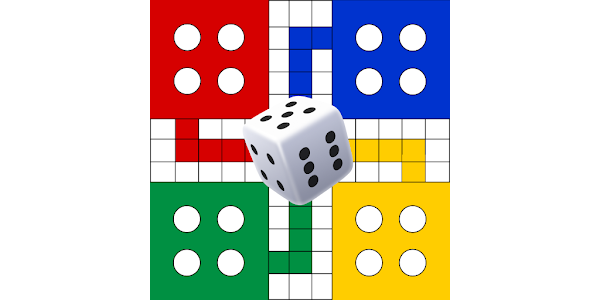
How to Win at Ludo
Token Deployment, Blockades, Safe Zones, and the Tactics Most Players Never Think About
The Game Everyone Underestimates
Ludo has been played on kitchen tables, living room floors, and travel trays for over a century. Derived from the ancient Indian game Pachisi and patented in England in 1896, it is one of the most widely played board games in the world — a staple of family game nights in dozens of countries, each with its own regional name and minor rule variations. The rules fit in two minutes. The average game takes under an hour. And most players walk away convinced the outcome was entirely determined by the dice.
It wasn't. Ludo contains meaningful decisions on nearly every turn — decisions about which token to move, when to play aggressively, when to shelter, and how to position pieces so that the same dice roll that helps your opponent also creates a problem for them. The randomness is real and inescapable. But the gap between a player who wins consistently and a player who blames the dice is almost entirely explained by positional thinking: managing multiple tokens, reading threats, and exploiting the board's architecture.
This guide covers the six core strategic principles that separate Ludo players who win regularly from those who just move whichever token is furthest ahead.
A Brief History of Ludo
Ludo's origins trace to Pachisi, a cross-and-circle game played in India for at least 1,500 years, documented in the Mughal court during the 16th century and depicted in the carvings at Fatehpur Sikri. Pachisi used cowrie shells as dice and a cloth playing surface. The game made its way to Britain during the colonial period, and in 1896 Alfred Collier received an English patent for Ludo — a simplified adaptation of Pachisi designed around a compact square board and a standard six-sided die.
The name comes from the Latin ludo, meaning "I play." Ludo quickly became a Victorian parlour favourite, and by the early 20th century it had spread across Europe and into British colonial territories, spawning dozens of regional variants: Uckers in the Royal Navy, Parcheesi in the United States, Mensch ärgere dich nicht ("Man, Don't Get Angry") in Germany, and Sorry! in the US market from 1934. Each variant adjusts the rules slightly — different safe zone configurations, different capture rules, different numbers of tokens — but all retain the same essential cross-and-circle architecture.
What makes Ludo endure is the same thing that makes it strategically interesting: four tokens, one board, and the constant tension between racing ahead and protecting what you have. The game's perceived simplicity is a surface illusion. Underneath it, every roll that matters is a genuine decision problem.
Principle 1: Get All Your Tokens Out Early
The single most common strategic mistake in Ludo is treating the game as a race with one horse. Players roll a 6, bring out one token, and spend the next twenty turns sprinting that single piece toward home while three tokens sit idle in their base. By the time the lead token gets into danger, there are no other pieces on the board to absorb threats or create pressure elsewhere.
Every 6 you roll is a deployment opportunity. Until all four tokens are active, prioritise bringing a new piece onto the board over advancing a token already in play. The marginal benefit of moving your lead token four squares further is almost always less valuable than introducing a second or third piece into the game. More active tokens means more options on every turn — and in Ludo, options are leverage.
The arithmetic is straightforward: a single token gives you one possible move each turn. Four tokens give you up to four — and often the right move is not the obvious one. The player with four pieces spread across the board is adapting to the dice. The player with one piece is hoping the dice cooperate.
Principle 2: Spread Out Across the Board
Once your tokens are in play, resist the instinct to keep them close together. Bunching tokens might feel safe — they look like a convoy — but in practice it is a trap. A tight cluster of tokens covers a narrow stretch of the board, leaving your opponent free to threaten, chase, or navigate around you everywhere else. And because captures are possible anywhere outside the safe squares, a well-placed opponent with a high roll can sometimes take out two pieces in the same sequence if they're positioned adjacent to each other.
Spread your tokens across the board's four quadrants if possible. A piece in your home quadrant, a piece in the first shared corridor, a piece in the second, and a piece near the final stretch creates a board presence that threatens opponents over a wider arc. Your opponent now has to manage four potential threats at different distances. You have a token near almost any square they might occupy. And critically, when you're hunting a capture, you have more angles from which to strike.
Spreading also protects you from wipeouts. If all four of your tokens are adjacent and someone rolls a lucky number that puts them on one of your squares, the damage is concentrated. Spread tokens limit how much a single bad roll can set you back.
Principle 3: Build Strategic Blockades
Ludo's rules allow two tokens of the same colour on the same square to form a blockade — a barrier that opponents cannot pass through or land on. This is one of the most powerful mechanics in the game, and one of the most underused by casual players.
A well-placed blockade does three things at once: it halts an opponent who rolls the right number to pass your position, it forces them to divert or wait, and it frees your other tokens to move without being chased. If you can anchor a blockade on a square that sits directly in the path of your fastest opponent — particularly in the shared outer ring — you can effectively stall their advance for several turns while you race ahead with your remaining pieces.
The best blockades are placed on high-traffic squares: the squares just after the starting points (where tokens enter the outer ring), the corners, and the straights leading into home columns. A blockade early in those corridors forces opponents to either wait for a roll that doesn't exist (they can't pass through your blockade at all), or burn turns moving slower pieces around the long way.
Principle 4: Use Safe Zones Deliberately
Every Ludo board has designated safe squares — typically the coloured star spaces in the shared outer ring and the starting points. Tokens on these squares cannot be captured. Most players know this abstractly but fail to use it tactically.
Safe squares are not just places your tokens happen to land. They are strategic destinations. Before rolling, look at where your vulnerable tokens are relative to the safe squares. If a token is three squares away from the nearest star and you roll a three, that is almost always the correct move — even if another token could advance further. A token on a safe square cannot be sent back. A token in open space is always at risk.
Think of the safe squares as rest stops in a dangerous landscape. The outer ring is contested territory where any piece can be hunted. The safe squares are neutral ground. If you have a choice between moving a token in contested space to a safe square or advancing an already-safe token, almost always choose the former.
Starting points — the squares on which tokens enter the board after a 6 — are also safe. This is often overlooked: a freshly deployed token sitting on its starting square is immune to capture. You can use this to "park" a token safely while you develop your other pieces, buying time before committing that piece to the contested outer ring.
Principle 5: Don't Chase Risky Captures
Sending an opponent's token back to their base is deeply satisfying. It also ranks among the most common causes of self-inflicted losses in Ludo. The problem is not that captures are bad — they're powerful. The problem is the position your own token occupies immediately after executing one.
A capture typically requires your token to land on precisely the square an opponent occupies. That means your token is now sitting in an exposed position on the board, often in a quadrant far from safety, with no blockade protecting it. If any other opponent has a token within rolling range behind you, your "successful" capture has handed them a free ride back into the game.
Before executing a capture, always ask: what is the counter-attack risk? Who is behind my token right now, and how many rolls would it take them to reach me? If the answer is "someone could reach me with a 2, 3, 4, or 5 on their very next turn," think hard before making that move. The token you just captured might come back out immediately, and now you've lost your own token for the privilege.
The best captures are those where your token lands either on a safe square or on a square defended by a friendly blockade nearby — or where no opponent has a piece within threatening range. Opportunistic, well-calculated captures are excellent strategy. Impulsive, emotion-driven captures are how games are thrown away.
Principle 6: Guard Your Home Column
The home column — the coloured stretch of squares leading from the entry point directly up to the home triangle — is both your safest territory and your most psychologically valuable real estate. Tokens in the home column cannot be captured by opponents. But opponents can linger near the entry point of your home column, threatening any token approaching it from the outer ring. Getting captured one square before your home column entry — after nearly completing a full circuit of the board — is one of the most demoralising setbacks in the game.
Pay attention to the squares just outside your home column entry. If an opponent has a token parked two or three squares behind your entry point, they are in hunting position. Any token of yours approaching from the outer ring needs to clear that threat before it can enter safety. If you have the option to capture that opponent piece, send it home. If not, consider whether you can use a blockade to shield your approach, or whether a different token should advance instead.
The entry square itself is particularly important in the late game: multiple tokens converging on a narrow home column creates congestion that benefits attackers. Stagger your home column entries if possible — don't pile three tokens up behind the entry point simultaneously, because any one of them getting captured can block the others' paths. Enter the column cleanly, one at a time, and advance directly to home rather than pausing.
A Concrete Game Scenario
You're playing a 4-player game, red. It's the mid-game. Your board position: one token is 8 squares from your home column entry; one token is on a safe star square near the second corner; one token is newly deployed on your starting square; one token is still in your base.
The player to your left (blue) has a token 4 squares behind your lead token. The player across from you (green) is close to home. You roll a 4.
The tempting move: advance your lead token 4 squares, which puts you 4 from your home column entry. But blue is 4 squares behind you. After your move, blue's token will need to roll exactly 4 to capture you — and 4 is a very roll-able number. You've just handed blue a high-value target.
The better move: advance your safe-square token (immune to capture there already), pushing it further along the outer ring while your lead token stays where it is — outside blue's easy capture range. This forces blue to either advance past your lead token or wait. Meanwhile, green's lead means your priority is pressure, not recklessness. Use the token on the starting square as a future blocker; plan to move it into position to create a blockade once you have a partner token nearby.
This is Ludo played as a positional game rather than a pure race. The dice are the same. The decision-making is entirely different.
Pre-Turn Decision Checklist
Run through this before every move:
- Do I still have tokens in base? If yes and I rolled a 6, bring one out before advancing any existing piece.
- Is any token in capture range of an opponent? Which move minimises my exposure — can I reach a safe square or safe zone?
- Can I make a blockade? Are two of my tokens within reach of the same square? A blockade creates more value than most advances.
- Can I make a capture? Is there an opponent token I can land on — and what is the counter-attack risk to my piece afterwards?
- Is an opponent near my home column entry? If yes, can I clear that threat before bringing more tokens through?
- Am I bunched up? If most of my tokens are in the same quadrant, consider using this roll to spread them, not to pile on further.
- Who is closest to winning? The leading player deserves your attention. A token near their home column is a higher-value target than one you chase out of spite.
The Game Night Pro Insight: Ludo as Threat Management
Here is the insight that transforms how you see Ludo: the game is not a race — it is a threat management exercise dressed up as a race. Every experienced Ludo player spends most of their mental energy not on moving forward, but on reading the board for where danger exists and engineering positions that are protected.
At game nights we run on Game Night Pro's Ludo platform, we consistently observe the same pattern: players who focus only on advancing their furthest-ahead token lose more often than players who make smaller-but-safer advances while managing position. A token that makes it to home is worth infinitely more than a token that gets knocked back to base four squares from the finish line.
This connects directly to the broader principle across all board games: options compound. Each decision that preserves future flexibility is worth more than it looks. Deploy early to maximise options. Spread to maintain board presence. Use safe squares to reduce risk. Build blockades to limit opponent options. These aren't defensive tactics — they are offensive ones, expressed over a longer time horizon than the immediate roll.
If you want to test these principles with real feedback, use the Game Night Pro Ludo game to run isolated scenarios — drop tokens into specific positions and see how different decisions play out without the pressure of an ongoing game.
Common Mistakes That Lose Ludo Games
- Racing one token while ignoring deployment: A single fast token is a single target. Multiple tokens create multiple threats and multiple escapes.
- Ignoring safe squares: Advancing past a safe square when you could land on it is giving up free insurance. The extra squares rarely justify the exposure.
- Reflexive captures: Sending an opponent back always feels good. Asking "what happens to my piece next turn?" before doing it is what separates consistent winners from emotional players.
- Never building blockades: Two tokens on the same square feels "wasteful" to beginners. It isn't — a blockade in the right spot can freeze an opponent for five turns.
- Ignoring the home column approach: Most captures happen in the last ten squares before home. Treat that stretch with more caution than anywhere else on the board.
- Moving the wrong token: When multiple tokens are legally movable, the reflex is to move the one furthest ahead. Often the best move is to protect a vulnerable piece, build a blockade, or deploy a new token. Pause before defaulting.
Ready to put these principles into practice? Open Ludo and try one full game with a single rule for yourself: before every move, name the token you're going to move and say why out loud. Externalising the reasoning reveals assumptions you didn't know you had — and it usually changes the decision.
Play Ludo Now →