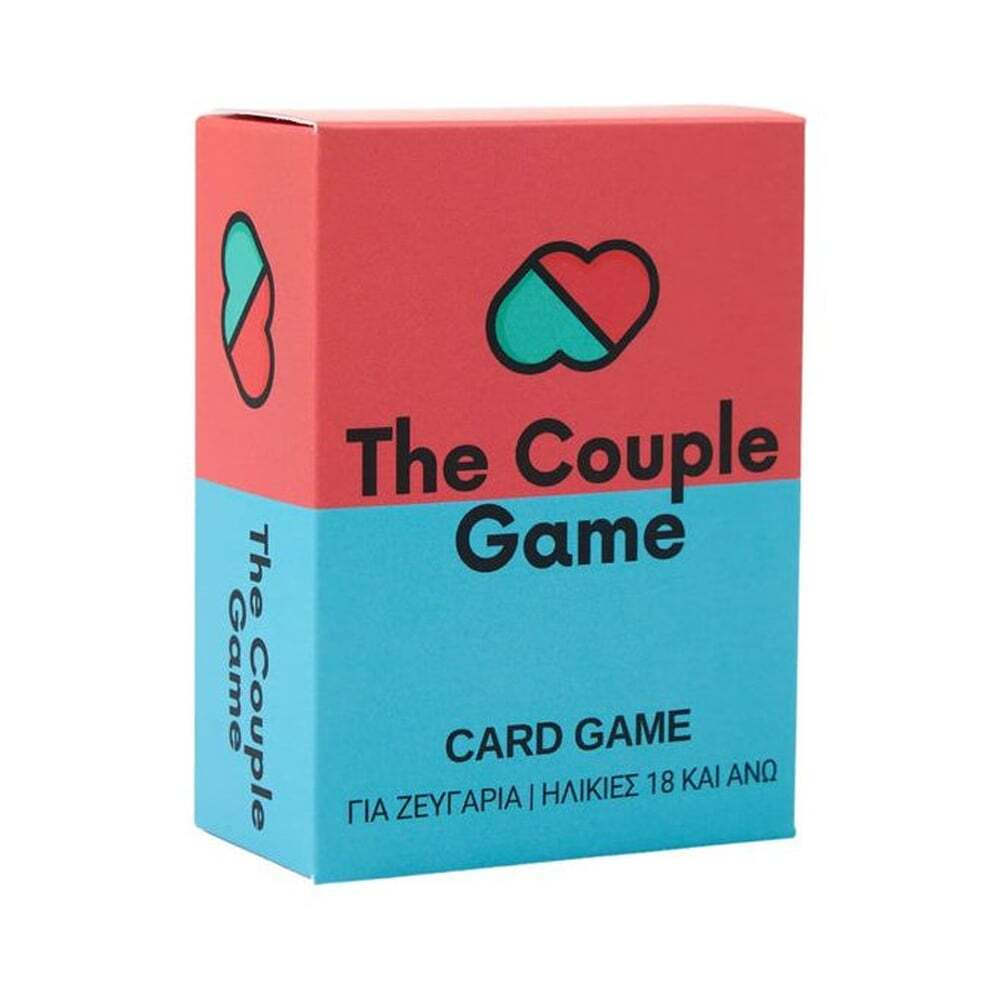
The Couple Game Review
A Conversation Starter That Actually Delivers
Hook / First Impression
Most games built around a relationship premise promise intimacy and deliver awkwardness. The Couple Game is different — not because it avoids awkwardness entirely, but because it leans into it with enough wit and range that the uncomfortable moments become the memorable ones. This is a card-based question game designed for two players in a romantic relationship, built on a simple but potent premise: how well do you actually know the person sleeping next to you?
Whether you have been together six months or sixteen years, The Couple Game finds a way to surface something you didn't expect — a forgotten memory, a quietly held opinion, an assumption you never realised you'd made. That alone makes it worth owning.
Overview
The Couple Game is a conversation and compatibility card game for two players — designed specifically for romantic couples. Players draw cards containing questions, prompts, and challenges about themselves, their partner, and their relationship. Some cards ask you to predict your partner's answer before they reveal it; others open a conversation with no single right response. The goal is not to win — it is to learn, laugh, and occasionally be surprised by someone you thought you knew completely.
| At a glance | |
|---|---|
| Players | 2 (designed exclusively for couples) |
| Play time | 30–60 minutes (open-ended) |
| Age | 18+ (some editions: 16+) |
| Weight | Very light — no rules to learn |
| Victory condition | None — cooperative/conversational |
| Category | Conversation / Relationship card game |
| Editions | Original, Spicy, Deep, Anniversary, Travel |
Components & The Setting
The Setting: There is no board, no board, no dice, and no tokens. You are yourselves — two people at a table, on a couch, or in a hotel room — and the cards are the conversation. The theme is fully integrated in the most literal sense possible: this is not a game about relationships; it is the relationship, structured and prodded into motion by 150–200 cards. There is no suspension of disbelief required and no character to inhabit. The vulnerability is real.
Components: The standard edition ships with a deck of cards, typically divided into categories — light icebreaker questions, medium compatibility challenges, and deeper reflective prompts. Cards are printed on matte stock with clean, readable typography and understated design. The box is compact enough to fit in a bag or nightstand drawer, which matters more than it sounds for a game played on evenings away or spontaneous date nights. A ribbon draw-bag or magnetic-closure box (depending on edition) keeps the cards sorted without needing rubber bands.
Component quality is functional rather than luxurious. The cards feel durable enough for repeated play and do not show wear quickly. The design is minimal by intention — no distracting illustration style, no gimmicky fonts — which keeps the focus exactly where it belongs: on the words and the people answering them. A premium linen-finish edition exists for those who want something gift-worthy.
How to Play
Setup is literally zero: shuffle the deck, place it between you, and draw. There are no turns in a strict sense — you and your partner alternate drawing cards and reading them aloud. Most cards fall into one of three formats:
- Prediction questions: Both players privately write or whisper their answer about the other person, then reveal simultaneously. ("What's your partner's biggest irrational fear?") The point is not accuracy — it's the conversation that follows when answers diverge.
- Open prompts: One partner reads a question and both discuss it freely. ("Describe the moment you knew this was serious.") No scoring, no timer — just talk.
- Challenges / dares: Light, physical or playful prompts that punctuate the heavier questions and keep the energy from getting too earnest. ("Give your partner a compliment they've never heard you say before.")
There is no formal win condition. Some couples play until the deck runs out; others play for a set time or stop when the conversation naturally takes over the cards. The game is designed to become unnecessary — a launching pad, not a destination.
Gameplay Feel
Pacing & Tension: The Couple Game moves at whatever pace the couple sets, which is both its greatest strength and a potential weakness. A naturally talkative couple will find every card an invitation to 10-minute tangents — sessions run long and feel alive. A quieter couple may find the prompts helpful scaffolding that gets them talking, or they may find the depth intimidating. The game does not pace itself; you do.
Emotional Range: The best sessions mix all three card types in quick succession — a laugh-out-loud challenge immediately followed by something that stops you mid-sentence because you've never actually thought about it before. That emotional range is the game's real design achievement. Pure earnestness grows exhausting; pure silliness feels cheap. The Couple Game manages the blend well, especially in the original and Deep editions.
Luck vs. Strategy: There is no strategy and no luck in any meaningful sense. Card draw order is random, which means you might hit a heavy prompt before you are ready — but that unpredictability is part of the point. The "wrong" moment for a difficult question often produces the most honest answers.
Rule Overhead: Essentially zero. If you can read a card aloud, you can play this game. The learning curve applies only to the emotional willingness to engage — which is the real game, and no rulebook can teach it.
Mechanics Deep-Dive
The Prediction Mechanic
The prediction format — where you answer a question about your partner before they reveal the truth — is the game's most original and most revealing mechanism. The interesting data is never in matching answers perfectly; it is in the patterns of mismatch. If you consistently predict your partner's professional ambitions accurately but miss their personal fears entirely, that asymmetry is the conversation. The game surfaces these patterns across a session without ever naming them explicitly.
The Depth Gradient
The category design — moving from surface to vulnerable — mirrors the structure of how trust is built in actual conversation. Therapists and communication coaches often note that people share more deeply when they feel safe in the earlier, lighter exchanges. The game approximates this naturally without requiring players to understand the theory. It is subtle design work dressed up as a card game.
No Scoring — By Design
The absence of a scoring system is a deliberate and correct design choice. Introducing points to a relationship game immediately creates winners and losers out of something that should be mutual exploration. Couples who "keep score" informally — tracking who knew more answers correctly — report enjoying the game less and missing the point more. The Couple Game works precisely because there is nothing to win except the conversation itself.
Player Count Analysis
1 Player — Not applicable. This game has no solo mode and no meaningful single-player variant. It requires a partner by design.
2 Players — The only count. The Couple Game is built exclusively for two and excels at it. Every mechanic — the mutual predictions, the shared prompts, the alternating reveal — depends on exactly two people. It is one of the few games in any genre designed with genuine intentionality around the two-player constraint rather than treating it as a limitation.
3+ Players — Not recommended. Some groups attempt to play The Couple Game as a party game by adapting the prompts to a group setting. It does not translate well. The vulnerability that makes two-player sessions meaningful becomes performance in a group context, and the prediction mechanic loses its intimacy entirely. If you want a group conversation game, We're Not Really Strangers or Exploding Kittens: Party Pack are better choices.
Replayability
Replayability in The Couple Game is genuinely high — but not for the usual reasons. The deck is finite, and you will eventually exhaust it. What changes across sessions is you. A question you answered one way at six months into a relationship lands differently at six years. The game's replayability is less about variety within the box and more about using the same prompts as a recurring relationship audit.
Multiple editions extend this naturally. The Deep Edition targets long-term couples who want to go further than the original's middle tier allows. The Spicy Edition leans into physical and intimate territory for couples who want the game to have a different kind of evening. The Anniversary Edition adds memory-based prompts that only make sense after years together. Owning two or three editions across a long relationship is a genuinely useful investment.
Learning Curve
Ease of teaching: There is nothing to teach. Draw a card. Read it. Answer it. The mechanical learning curve is zero. The emotional learning curve — being willing to answer honestly, to sit with a surprising answer from your partner without immediately deflecting — is where the real growth happens, and that is a personal curve, not a rulebook problem.
First-game experience: Almost universally positive, with the caveat that the first five minutes can feel slightly self-conscious. Players report that the initial mild awkwardness dissolves quickly once a prompt lands that genuinely surprises both people. That first unexpected answer — the one that makes you say "I didn't know that about you" — is the moment the game clicks, and it typically arrives within the first 10 cards.
Who It's For
New couples (under 2 years): Excellent. The Couple Game accelerates the natural process of learning each other — surfacing topics that might not come up organically for months. It is particularly valuable for couples navigating the transition from casual to serious, where the questions it asks ("Where do you see this going?" "What's your non-negotiable?") are the ones both people are thinking but haven't found the right moment for.
Long-term couples: Equally valuable, and arguably more surprising. The assumption that you know everything about your partner after years together is precisely what the game tests — and disproves, reliably, within a single session. Long-term couples often report that the most impactful sessions come from questions about present feelings and future intentions, not nostalgic ones.
Gift context: The Couple Game is one of the most reliably well-received couple gifts in the conversation game genre. It signals thoughtfulness without being impractical, it requires no setup, and it has immediate use on the evening it's unwrapped. Better than flowers; almost as good as a dinner reservation.
Comparisons: We're Not Really Strangers covers similar emotional territory but is designed for any two people — friends, strangers, or couples — and lacks the partner-specific prediction mechanic. Taboo for Two and similar party-game spinoffs are lighter and more competitive. If you want something strictly for a romantic context with real depth, The Couple Game has no direct peer.
Pros & Cons
What The Couple Game does well:
- The prediction mechanic is genuinely original — it surfaces patterns in how you see each other, not just facts you know or don't know.
- Depth gradient design works as intended: light cards create safety; deeper cards land harder because of it.
- Zero setup, zero rules overhead — it is immediately accessible on any occasion, sober or not, planned or spontaneous.
- Compact packaging makes it a natural travel game and a reliable date-night kit.
- The absence of scoring keeps the game collaborative rather than competitive — correctly identified as the right call for this genre.
- Multiple editions cover meaningfully different emotional territories, giving the game long shelf life across a relationship's arc.
Where The Couple Game struggles:
- A finite card deck means the base game does eventually exhaust itself — the original edition offers limited replayability without purchasing additional editions.
- Question quality is uneven: the best prompts are genuinely revelatory; the weakest feel generic and could have come from any relationship listicle. The ratio is good but not perfect.
- Self-pacing cuts both ways — couples who struggle to talk freely may find sessions stalling without the game providing any scaffolding for those quiet moments.
- The Spicy Edition's tone shift is jarring if you play editions interchangeably — the tonal inconsistency across editions is a minor but real product design weakness.
- No timer, no structure beyond the cards — couples who want a "game" with stakes may find this feels too open-ended to call it a game at all.
Expansions & Ecosystem
The Couple Game has expanded into a small ecosystem of standalone editions. Each is self-contained and can be played alone or combined with others for a longer, more varied session.
Original Edition — The essential starting point ★★★★★
The foundational deck with the widest emotional range. Best balance of depth gradient and variety. The right first purchase for any couple.
Deep Edition — For couples ready to go further ★★★★☆
Focused on longer-term emotional depth: life values, shared futures, relationship patterns, and unspoken needs. Best suited to established couples who have played the original and want to go somewhere harder. Not recommended as a first edition — the absence of lighter warm-up cards makes early sessions feel intense without the earned safety.
Spicy Edition — For intimate evenings ★★★☆☆
Leans into physical attraction, desire, and intimacy. Works well for what it is but represents a significant tonal departure from the original. The question quality dips slightly — some prompts feel gratuitous rather than genuinely revealing. Worth it for the right occasion; not a replacement for the emotional depth of the standard editions.
Anniversary Edition — For long-term couples only ★★★★☆
Memory-based prompts ("What's the moment you're most proud we got through together?") that only make sense if you have years of shared history. Beautiful in context; meaningless without it. Makes an excellent anniversary gift precisely because it can only be used by a couple who has earned it.
| Edition | Best For | Emotional Weight | Rating |
|---|---|---|---|
| Original | All couples — any stage | Light to deep | ★★★★★ |
| Deep | Established couples, serious conversations | Deep | ★★★★☆ |
| Anniversary | Long-term couples, milestones | Reflective / nostalgic | ★★★★☆ |
| Spicy | Intimate occasions | Physical / playful | ★★★☆☆ |
Value for Money
The Couple Game retails for approximately $20–$30 USD per edition, placing it at the budget-friendly end of the specialty card game market. For a game that generates a genuinely meaningful 45-minute experience from a cold start with no setup, the price-to-value ratio is strong. The caveat is that the base deck is finite — once you have played through it two or three times, the prompts lose their freshness.
The smart buying strategy:
- New couple: The original edition alone is excellent value — it will see multiple sessions before growing stale, and the conversations it starts outlast the game itself.
- Gift: The original plus Anniversary edition as a bundle is the strongest gift pairing — the original for now, the Anniversary for later. It signals that you are thinking about the long arc, which is a good signal to send.
- Long-term couple: Start with Deep Edition if you have already burned through the Original. It will feel fresh despite covering similar emotional territory at higher intensity.
Second-hand copies are not commonly available — this game gets used, not shelved — which is itself a reliable indicator of its value. When people keep something through several moves, that tells you something.
Accessibility
Language dependence: High — this is an entirely text-based game. Every card requires reading and verbal communication. It is available in multiple languages; confirm availability in your language before purchasing. The game does not translate well through real-time translation tools because the nuance of question phrasing matters significantly.
Cognitive accessibility: Well-suited to most players. Questions are clearly worded, there is no time pressure, and there are no rules to track. Players with reading difficulties may find it easier to have their partner read cards aloud. The open-ended format means there are no wrong answers and no penalisation for misunderstanding a prompt.
Emotional accessibility: The game assumes a level of emotional openness that not everyone has on any given evening. Some prompts touch on family history, past trauma, fears, and relationship insecurities — topics that may be difficult for players currently navigating grief, relationship stress, or mental health challenges. The skip-without-penalty convention (any card can be passed, no explanation required) is the right design choice and should be explicitly established before play begins.
Physical accessibility: The cards are standard size, easy to hold and read, and require no dexterity beyond drawing from a deck. Suitable for players with most physical accessibility needs.
Age range: The 18+ rating is appropriate for the original edition given the relationship and intimacy themes. The Spicy Edition is strictly adult. Some publishers offer a lighter "dating edition" designed for the early stages of a relationship that is suitable from age 16+.
Verdict
The Couple Game is not trying to be a board game, and it succeeds at not being one. It is a structured conversation tool wearing a game's clothing — and that framing is both its greatest strength and the thing that puts off players who expect mechanical depth. Judged on what it actually is, it is excellent: thoughtfully graduated in depth, honest about its purpose, well-designed for the two-player constraint, and reliably effective at doing the one thing it promises. It will tell you something about your partner — or yourself — that you didn't already know.
Buy it if: you want a reliable, low-barrier way to have a more intentional conversation with your partner than the average Tuesday evening provides.
Skip it if: you are looking for competitive mechanics, strategic depth, or a game you can play with more than two people.
Upgrade it after: one or two sessions through the original edition — the Deep Edition is the natural next step and arguably delivers the format at its highest point.
Score Breakdown
Looking for more games that work brilliantly for two? Explore our full reviews library for picks across every genre and mood.
Browse All Reviews →