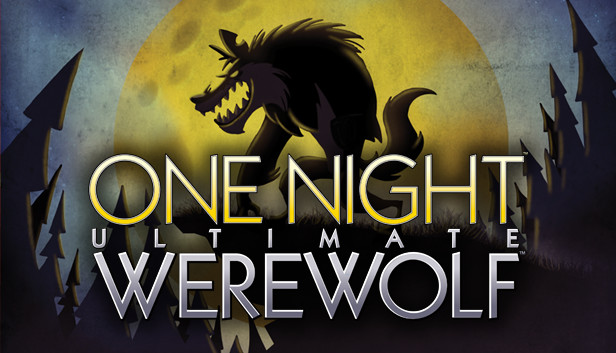
One Night Ultimate Werewolf Review
Ten Minutes of Chaos, Accusation, and Brilliant Confusion
Hook / First Impression
The phone narrates the night. Eyes close, hands move in the dark, cards shift across the table — and then everyone opens their eyes and the five-minute argument begins. You were the Seer. You looked at a card and saw a Werewolf. But someone else claims to be the Seer. And you are suddenly not sure whether the card in front of you is even still yours. Someone swapped it. One of the Troublemakers. Or maybe the Robber. And the village has exactly three minutes to figure it out before the vote.
One Night Ultimate Werewolf, designed by Ted Alspach and Akihisa Okui for Bezier Games, is one of the most genuinely clever redesigns of a classic game format in modern board gaming. It takes the sprawling, hour-long social deduction of traditional Werewolf — a parlour game infamous for long waiting periods, early eliminations, and dead players who have to sit quietly until the game ends — and compresses the entire experience into a single ten-minute round with no elimination, no moderator, and no downtime. The result is something that plays faster than almost any comparable game while generating more chaotic, layered social drama per minute than most titles ten times its length.
Overview
One Night Ultimate Werewolf is a social deduction game for 3–10 players in which the village — a mix of Villagers, special roles, and at least one Werewolf — must identify and vote to eliminate a Werewolf in a single combined discussion and vote. Three cards are placed face-down in the centre of the table unused; during the night phase, certain roles secretly take actions that may swap cards between players or the centre, peek at cards, or wake teammates. By the time everyone opens their eyes for the day phase, nobody is entirely certain what role they currently hold. The Werewolves try to survive the vote. Everyone else tries to find and eliminate them. One round. No elimination. No waiting.
| At a glance | |
|---|---|
| Designers | Ted Alspach & Akihisa Okui |
| Publisher | Bezier Games |
| Year | 2014 |
| Players | 3–10 |
| Play time | 10 minutes |
| Age | 8+ |
| Weight | Light (BGG ~1.5/5) |
| Victory condition | Village: at least one Werewolf eliminated. Werewolves: no Werewolf eliminated at the vote. |
Components & The Setting
The Setting: Players are villagers in a small town where Werewolves have infiltrated overnight. The theme is borrowed wholesale from the classic Werewolf/Mafia parlour game tradition, and it carries the same folk-horror flavour: night falls, secret acts occur, and daylight brings accusation. The theme is lightly integrated — roles have atmospheric names (Seer, Robber, Troublemaker, Insomniac, Minion, Tanner) but no mechanical narrative beyond their night-phase ability. It is, nonetheless, exactly the right setting: it explains the night-phase logic instinctively, makes the roles feel cohesive, and gives the day-phase argument a dramatic weight that a more abstract framing would not. When someone insists they are the Seer and they saw a Werewolf in the centre pile, the word "Seer" does real atmospheric work.
Component quality is good and appropriately minimal. The box contains role cards (beautifully illustrated, one per player plus three extra for the centre pile), role tokens (cardboard discs showing each player's original role for personal reference), and a quick-reference sheet. The game requires a free companion app — available for iOS and Android — which narrates the night phase, calling each role in sequence and timing the day discussion. Without the app a human moderator can read from the included narration script, but the app is so well designed and so widely available that it is the standard mode of play. The artwork is richly atmospheric: dark, stylised illustrations in the vein of classic fairy-tale illustration, completely appropriate to the material.
How to Play
Setup: Select a set of roles based on player count and preference — always include at least two Werewolf cards. Deal one role card face-down to each player and place three cards face-down in the centre of the table. Players look at their own role secretly. Then the app begins the night phase.
Night phase (app-narrated, approximately 2–3 minutes): All players close their eyes. The app calls each role in sequence — only players holding that role open their eyes to perform their action. Actions vary by role:
- Werewolves open their eyes and identify each other (and optionally look at one centre card if they are the lone Werewolf).
- Minion (if in play) opens eyes and sees the Werewolves — but is not seen by them — and wins if no Werewolf is eliminated even if they are.
- Masons open their eyes and identify each other as trusted Villagers.
- Seer looks at another player's card or two of the three centre cards.
- Robber swaps their card with another player's card and looks at the card they took.
- Troublemaker swaps any two other players' cards without looking at either.
- Drunk swaps their card with a centre card without looking at what they took.
- Insomniac looks at their own card to see if it has changed during the night.
Day phase (timed, 5 minutes): All players open their eyes. The app starts a five-minute countdown. No restrictions on discussion — players may claim any role, share any information (true or false), accuse anyone, or stay silent. There is no structure beyond the clock. When time expires, all players simultaneously point at who they believe is a Werewolf. The player with the most votes is eliminated. The outcome is checked: if that player holds a Werewolf card, the Village wins. If not, the Werewolves win — unless a Tanner (a Villager who wins only by getting eliminated) is voted out instead.
Gameplay Feel
Pacing & Tension: One Night plays at a sprint. The night phase is fast and slightly tense — you perform your action in darkness while everyone else is also performing theirs, unseen, and you have no idea what has changed by the time you open your eyes. The day phase is a barely-controlled explosion of claims, counter-claims, and pointed fingers. The five-minute timer creates pressure that shorter game sessions often lack: there is no time for methodical analysis, which forces everyone to commit to positions and accusations faster than feels comfortable. The tension peaks in the final thirty seconds when the vote is imminent and the room is still arguing.
Player Interaction: Maximum throughout the day phase; effectively zero for most players during the night phase (which is intentional and quick). One Night shares with Avalon the quality of having no downtime — but it achieves it through sheer speed rather than structural design. There is no turn order during the day phase; it is an open conversation where everyone participates simultaneously. Louder, faster players can dominate, but the timer limits how much one voice can monopolise.
Luck vs. Strategy Balance: More luck-influenced than Avalon, and explicitly so. Your role is random. The roles in the centre are random. Whether the Troublemaker swaps your card depends on who has what role. A skilled Seer who correctly identifies a Werewolf can still lose the vote because the group does not believe them. One Night does not try to be a game of pure skill — it tries to be a game of chaotic, compressed social drama where the imperfect information is part of the fun. Within those constraints, genuine skill in persuasion, role-claiming, and reading the table matters significantly.
Rule Overhead: Very low in total, but front-loaded in role explanation. The core mechanics — night phase actions, day discussion, one vote — take five minutes to explain. The complication is the role abilities: a new player can immediately understand how to play but needs to understand what each role does before their first game. With the companion app handling night-phase narration, the learning curve for role mechanics is dramatically reduced — the app tells you when to wake up and what your action is, so players can learn by doing rather than by reading.
Mechanics Deep-Dive
The Identity Uncertainty Engine
One Night's central mechanical achievement is creating a social deduction game where the players themselves are not certain of their own identity. In classic Werewolf, your role is fixed — you are a Werewolf or a Villager and you know it. In One Night, three roles (Robber, Troublemaker, Drunk) can change what card sits in front of each player during the night phase. A Robber who steals a Werewolf card is now a Werewolf who does not know who the original Werewolves are. A player who went to sleep as a Villager may wake up as a Seer because the Robber took them. A Drunk swapped their card for a centre card and has no idea what they are now. The Insomniac checks their card at the end of the night specifically because of this uncertainty — and knowing that your card is unchanged is itself a piece of information.
This uncertainty is the game's engine. Every claim in the day phase carries a qualification that classic Werewolf does not have: "I think I am still the Seer, but someone may have swapped me." That caveat is real and verifiable — if the Insomniac, the Robber, and the Troublemaker all share their information honestly, the table can often reconstruct exactly what happened during the night. The game rewards groups who share information efficiently and punishes groups who argue without pooling their knowledge.
Role Synergies and Configurations
One Night's role set is smaller than Avalon's but its configurations produce a wider variance in individual game texture. The critical design choices are which roles to include in a given session — the app lets you toggle roles on and off, and the combination significantly changes how much information the Village can generate and verify. Key roles and their table impact:
- Seer — the Village's primary investigative tool. Looks at one player's card or two centre cards. Seer claims are extremely common, which means multiple players claiming Seer simultaneously is a reliable source of deduction: at most one of them is real (unless a Robber stole a Seer card, in which case two players may genuinely believe they are the Seer).
- Robber — swaps their card with another and immediately knows what they stole. Creates a chain: the Robber knows their new role and whose card they took; the player whose card was taken does not know they were robbed until the Insomniac (if present) reports. The Robber is the role most likely to generate confusing, apparently contradictory claims.
- Troublemaker — swaps two other players' cards without looking at either. The Troublemaker knows which two cards moved but not what they were. The players whose cards were swapped are unaware unless the Insomniac checks. Troublemakers are the chaos injection — they can make an innocent player appear Werewolf and a Werewolf appear innocent simply by swapping at the right time.
- Drunk — a Villager who swapped their card with a random centre card before seeing what they took. The Drunk genuinely does not know their current role — they can only know their original role was Drunk and that it is now gone. Often the most confused and most entertaining player at the table.
- Tanner — a Villager who wins only if voted out. Creates a third win condition that changes voting calculus: a confident claim to be Tanner is either honest (and you should not vote for them since a Tanner win means everyone else loses), or a bluff (they are a Werewolf hiding behind a convenient defence). The Tanner is optionally included and significantly raises deception complexity when present.
- Insomniac — checks their own card after all other night actions. The most reliable information source in the game: the Insomniac knows with certainty what card they currently hold. Combined with a Robber or Troublemaker, Insomniac creates the information trail that allows the Village to reconstruct the night's events.
Player Count Analysis
3–4 Players — Functional, but thin. The minimum counts work mechanically, but the social dynamics are compressed to a point where the game feels almost like a coin flip. With three players, there is essentially one Werewolf, one Villager, and one other role — and the deduction space is extremely narrow. Useful as a teaching tool to demonstrate the mechanics, but not representative of the full experience.
5–6 Players — Good. The role set expands to include more active abilities, and the day-phase discussion has enough voices to become genuinely interesting. Five and six players is where the game first starts to feel like itself: enough claims to conflict, enough roles to create uncertainty, enough noise to allow deception to breathe. A solid default for smaller groups.
7–8 Players — Excellent. The sweet spot. Eight players means a rich mix of roles, multiple conflicting claims, and a day discussion that covers enough ground to feel like genuine collective deduction rather than guesswork. The five-minute timer produces real pressure at this count, and the simultaneous vote creates drama that is hard to manufacture in any other game format.
9–10 Players — Chaotic and thrilling. At maximum count, One Night becomes a wonderful mess. Ten voices trying to share information in five minutes is genuinely chaotic — important claims get lost, Werewolves exploit the noise, and votes often feel more like a mob decision than a logical conclusion. This is not a weakness so much as a feature: it reflects what a panicked village actually looks like, and experienced groups at high counts develop a kind of organised chaos that is deeply entertaining to play and observe.
Replayability
One Night Ultimate Werewolf has exceptional replayability, powered by four independent variables: role configuration (which roles you include), role assignment (random each game), night-phase outcomes (what actions were taken and what was swapped), and player behaviour (how people claim, react, and vote). The intersection of these four variables produces a game that genuinely never repeats itself. A game with the same role set can play entirely differently depending on whether the Troublemaker swaps the two Werewolves (creating hilarious confusion among the Wolf team) or swaps one Werewolf with the Seer's card.
The companion app's role library also expands with the Daybreak, Vampire, and other expansion sets, adding new role types that change the game's dynamics significantly. The base game's sixteen roles alone provide more configuration variety than most games of ten times the price. Groups that have played hundreds of sessions still find new combinations worth exploring.
The ten-minute play time is itself a replayability multiplier. Because a session is so short, the cost of a bad game is low — you reshuffle, reconfigure if needed, and play again. This removes the sting of a frustrating result and makes experimentation with new role combinations low-risk.
Learning Curve
Ease of teaching: The core rules are very simple. The night phase is handled by the app, which teaches the actions by doing them — new players learn their role ability by being told when to wake up and what to do. The day phase needs no explanation beyond "discuss and vote." The main teaching challenge is helping new players understand why roles like Robber and Troublemaker create uncertainty — the first game often confuses players who expect their starting card to remain theirs throughout. One quick verbal explanation before the first round ("your card may no longer be yours when you open your eyes") solves this.
Rulebook quality: Minimal and sufficient. The physical rulebook covers the rules clearly, but the companion app's role descriptions and narration do most of the heavy lifting in practice. The app's role selection screen includes brief descriptions of each role's ability, making it a useful reference during setup. New players should read their role token before the night phase starts — the token reminds them of their starting ability even if their card changes.
First-game experience: Almost universally positive, even among players who have never tried social deduction games. One Night's ten-minute structure means that a confused or misjudged first game costs almost nothing and a second game immediately follows. The pace of the day phase — energetic, loud, time-pressured — is immediately engaging rather than intimidating. The most common first-game feedback is "wait, we're already voting?" followed closely by "can we play again?"
Who It's For
Groups of mixed experience: One Night is one of the best games available for groups that include board game enthusiasts alongside casual or non-gamers. The rules are simple enough to onboard anyone in five minutes, but the social dynamics are immediately engaging for experienced players. This rare combination of accessibility and genuine engagement makes it the ideal entry into social deduction for mixed groups.
Fans of traditional Werewolf who hate player elimination: One Night was designed explicitly to solve the worst problem of traditional Werewolf — sitting dead for twenty minutes while everyone else plays. If you have been burned by that format, One Night is the direct remedy. Same social reading and deception, none of the downtime, no moderator required.
Groups looking for a warm-up or filler: At ten minutes per game, One Night fits where most games cannot — as a pre-game warm-up while waiting for latecomers, as a quick cooldown between heavier titles, or as the thing you play when the evening is winding down and concentration is low. The brevity is strategic flexibility, and experienced hosts keep a copy in their bag specifically for this function.
Who it is not for: Players who want deterministic, purely skill-based experiences will find One Night's luck quotient frustrating — roles are random, night outcomes are random, and the vote is a social process that does not always reward correct reasoning. Groups who want slow, methodical deduction should look at Avalon instead. Extremely conflict-averse players may find the accusation dynamics uncomfortable, though One Night's light-hearted tone and short rounds make it significantly less socially pressured than longer deduction games.
Pros & Cons
What One Night does exceptionally well:
- Ten-minute play time with no player elimination — the single most important innovation over traditional Werewolf, and it is executed without compromise.
- The companion app is polished, free, and effectively removes the only barrier to entry the game's classic forebear required: an experienced, non-playing moderator.
- Role-swap mechanics create genuine identity uncertainty that no other social deduction game in this weight class replicates.
- Scales naturally from 3 to 10 players; genuinely playable (and fun) across the entire range with role configuration adjustments.
- Highly repeatable — most groups play three to six rounds per session automatically, making the total experience much longer than the ten-minute count suggests.
- Outstanding value: affordable, compact, and endlessly variable through role combinations and three major expansion sets.
- Appropriate for a wider age range (8+) than most social deduction games, without sacrificing depth for adult groups.
Where One Night falls short:
- Luck plays a larger role than in Avalon or Secret Hitler — a Werewolf who is never investigated by the Seer can win through pure fortune regardless of how well the Village plays.
- Requires a smartphone and the companion app for the standard experience; groups unwilling to use the app must recruit a moderator, which reintroduces the friction the game was designed to eliminate.
- The five-minute day discussion is too short for groups that enjoy methodical deduction — veterans of Avalon often find the pace feels forced rather than energising.
- Dominant personalities can steamroll the vote before quieter players can share useful information; the short timer exacerbates this more than longer games do.
- Very high player counts (9–10) can make information coordination nearly impossible — important Seer or Insomniac claims get drowned out before the Village can act on them.
- The role set requires careful configuration for balanced play; beginners without guidance may select unbalanced combinations that create lopsided games.
Expansions & Ecosystem
One Night Ultimate Werewolf has a well-developed expansion ecosystem, and uniquely, the companion app supports all expansions seamlessly — you simply toggle the new roles into your role pool alongside base game roles.
One Night Ultimate Daybreak (2015) is the essential first expansion. It adds nine new roles, including the Apprentice Seer, Aura Seer, Mystic Wolf, Alpha Wolf, Witch, Dreamwolf, P.I., Curator, and Revealer. Many of these roles interact with other roles in novel ways — the Mystic Wolf, for example, looks at another player's card during the night just as a Seer would, while the Curator places artefact tokens that modify roles. Daybreak mixes seamlessly with the base game and significantly expands the configuration space. Highly recommended alongside the base game.
One Night Ultimate Vampire (2015) introduces a new faction — Vampires — alongside Villagers and Werewolves, creating a three-way faction structure with its own win conditions. The Vampire team marks players with coffin tokens during the night, converting them. This expansion is more of a standalone variant than an addition to the base game and works best with groups who have mastered the core Werewolf experience and want a significantly different flavour.
One Night Ultimate Alien (2017) adds the Alien faction and introduces a new interaction type: brain tokens that players can place on each other during the night phase. Like Vampire, this plays differently enough from the base game that it functions as a variant rather than a straightforward expansion.
Value for Money
One Night Ultimate Werewolf retails for approximately $25 USD (€20 in Europe). For a game that plays in ten minutes and supports up to ten players, this is outstanding value. The free companion app eliminates any need for additional purchases to access the full experience. A group that plays three rounds per session will spend more hours with this game than most titles costing three times as much.
- Large group hosts: Exceptional value. Finding a quality game that works well at 8–10 players without compromise is genuinely difficult. One Night solves the large-group problem at a fraction of the price of most alternatives.
- Mixed-experience groups: Outstanding. The accessibility-to-depth ratio is among the best in the hobby. Non-gamers can play on their first attempt; experienced players find enough strategic texture to remain engaged.
- Gift purchase: An excellent choice for any social group that enjoys party games and is ready for hidden roles. The price is low enough to be a no-risk gift; the play time is short enough that it will actually get played at busy game nights.
Accessibility
Color blindness: Role cards are distinguished primarily by illustration and text rather than colour alone. The companion app's visual display of active roles does use colour, but the text labels make colour a secondary cue rather than the primary identifier. One Night is reasonably accessible for colour-blind players.
Language dependence: Low for the physical components — role names and brief ability descriptions on tokens are the only text, and the companion app reads all narration aloud. Non-native speakers who can follow spoken narration in the app's language can participate fully. The app is available in multiple languages, making regional editions accessible. The day-phase discussion is verbal and in whatever language the group shares.
Cognitive accessibility: Lower demand than most deduction games, and front-loaded rather than sustained. The main cognitive requirement is remembering your role ability before the night phase and tracking the claims made during the day discussion. The companion app handles narration timing, eliminating any cognitive load from moderating. Players who find it difficult to track multiple pieces of information simultaneously may struggle with the information management aspect, but the short play time limits how much information accumulates before a reset.
Hearing and speech accessibility: The companion app narration is auditory and requires participants to hear cues — the app does not provide visual-only prompts in its standard mode. Players with hearing difficulties may need adaptation (a sighted helper relaying cues, or using subtitles if the app supports them). The day discussion is verbal; players who cannot easily participate in open spoken conversation are disadvantaged and require group accommodation to adapt the format.
Age range: The 8+ rating is accurate and generous — One Night is one of the most family-accessible social deduction games available. The short play time, simple rules, and app-guided night phase make it genuinely playable for mature children. The deception element is mild in tone compared to Avalon or Secret Hitler, and the quick resolution means that being wrong carries no lasting social weight.
Verdict
One Night Ultimate Werewolf is the best ten-minute social deduction game ever made, and it is not particularly close. By stripping traditional Werewolf to its essential moments — the paranoid uncertainty of the night, the chaotic accusation of the day — and removing everything that made the original frustrating (player elimination, the need for a skilled moderator, the long waiting periods), Ted Alspach and Akihisa Okui created something that is simultaneously more accessible and more replayable than the game it was derived from.
The role-swap mechanics are the game's genuine design achievement. Creating a social deduction game where players are uncertain of their own identity is a simple idea with profound implications for how every discussion plays out. Every claim carries an asterisk. Every accusation can be deflected. Every piece of information the Village generates can be undermined by the possibility of a swap that no one witnessed. The five-minute discussion is not enough time to resolve this uncertainty perfectly — and that is the point. One Night is a game about making the best decision you can with incomplete, possibly corrupted information, in limited time, with people who may or may not be lying. That is not a simulation of any board game experience. It is a simulation of life under pressure.
Buy it if: you want a fast, flexible, endlessly replayable party game that can scale from five to ten players and plays in under fifteen minutes. It belongs in every game library. At this price and this play time, there is no legitimate reason not to own it.
Consider Avalon instead if: your group wants longer, more methodical social deduction with a higher strategic ceiling and no luck dependence. One Night and Avalon are complementary rather than competitive — different tools for different contexts, both excellent in their domain.
Score Breakdown
Enjoyed this review? Explore more honest board game reviews, score calculators, and strategy guides — everything you need for a better game night.
Browse All Reviews →