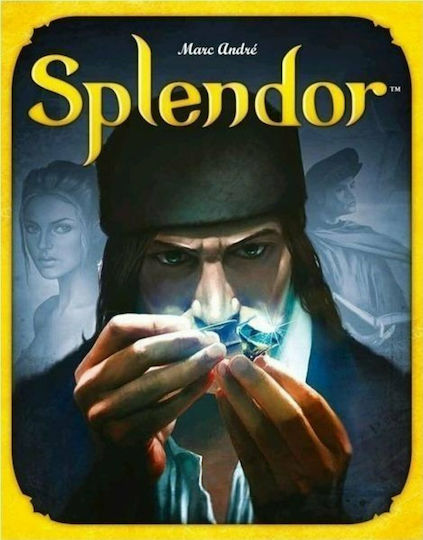
Splendor Review
The Gateway Engine-Builder That Became a Classic
Hook / First Impression
When Splendor hits the table, something clicks almost immediately. The heavy poker chips — weighty, stackable, enormously satisfying to handle — get passed around before anyone has read a rule, and within a minute everyone is examining the jewel-merchant cards and quietly asking, "wait, so I just collect gems and buy things?" The answer is essentially yes, and what follows is a 30-minute race of quietly escalating brilliance.
Splendor was nominated for the Kennerspiel des Jahres in 2014 — an award for games a step above the family tier — and has since sold millions of copies across dozens of printings. It earned that audience not through complexity but through the rare quality of feeling intuitive from turn one while revealing surprising strategic depth by turn ten. It is, in the truest sense of the phrase, easy to learn and endlessly interesting to play well.
Overview
Splendor is a card development and chip-collection game designed by Marc André and published by Space Cowboys in 2014. Players take the roles of Renaissance gem merchants, collecting gem tokens to purchase development cards that produce permanent gem bonuses, then using those bonuses to attract noble patrons and race to 15 prestige points.
| At a glance | |
|---|---|
| Designer | Marc André |
| Publisher | Space Cowboys / Asmodee |
| Year | 2014 |
| Players | 2–4 |
| Play time | 30–45 minutes |
| Age | 10+ |
| Weight | Light-medium (BGG ~1.8/5) |
| Victory condition | First to reach 15 prestige points wins (after the triggering round completes) |
Components & The Setting
The Setting: You are a gem merchant in Renaissance Europe, building trading routes by acquiring mines, transport links, and craftsmen — represented by development cards in three tiers of increasing cost and prestige. Noble tiles representing wealthy patrons visit whichever merchant first develops the right combination of card bonuses. The theme is thin enough that the game could be reskinned as anything involving resource accumulation, but the jewel-merchant frame is cohesive and gives the card art a consistent, handsome visual identity.
Components are the first thing anyone picks up in a Splendor box, and for good reason. The 40 poker-style gem chips — in six colours, heavy, smooth, with a satisfying click when stacked — are among the most tactilely pleasing tokens in hobby gaming at this price point. They feel like casino chips, not cardboard punches, and they elevate the experience of every single turn you take. The development cards are standard tarot-sized with clear iconography; nothing premium, but entirely functional. Noble tiles are satisfyingly thick cardboard. The cloth bag for the gold joker tokens is a small but appreciated touch.
The box insert holds everything cleanly. Setup takes under three minutes: deal out the three card tiers face-down in rows, flip four from each tier face-up, distribute starting gems by player count, and set out the noble tiles. Teardown is equally brisk. For a game this frequently played, the logistics matter — and Splendor gets them right.
How to Play
The goal is to reach 15 prestige points before your opponents. Points come from purchasing higher-tier development cards and from attracting noble tiles. The game ends at the close of the round in which any player first hits 15 — every player gets equal turns.
Each turn, you take exactly one of three possible actions:
- Take three gem chips of three different colours from the central supply.
- Take two gem chips of the same colour — but only if at least four chips of that colour remain in supply.
- Purchase a development card by spending gem chips and/or bonuses from cards you have already bought. Bonuses are permanent: a purchased card showing a sapphire icon reduces the cost of all future cards by one sapphire, forever.
You may also reserve a card (removing it from the market and taking one gold joker chip) on your turn, but this counts as your entire action. Reserving protects a card you want from being taken and gives you a flexible wild-gem token. You may hold up to three reserved cards at any time.
At the end of your turn, if your accumulated card bonuses meet a noble tile's requirements, that noble visits you automatically — contributing 3 prestige points and triggering no additional action cost. Nobles are not taken; they arrive.
Gameplay Feel
Pacing & Tension: Splendor moves quickly. Each turn is a single decision from three options, and even in four-player games downtime between turns is minimal — rarely more than a minute. Rounds accelerate as players' engines develop: early turns are deliberate gem-gathering; later turns see cards purchased in rapid succession as bonus discounts stack. The game rarely drags, and a full four-player session reliably finishes in 40 minutes.
Tension escalates predictably and satisfyingly toward the endgame. The first player to reach 12 or 13 points makes the whole table suddenly aware that the game is almost over, and the final round often comes down to whether anyone else can trigger their winning card purchase in time. That last-round scramble is reliably exciting even in games that felt leisurely up to that point.
Player Interaction: Splendor is competitive but indirect. You cannot attack opponents or block them directly. Interaction comes through card denial — purchasing or reserving cards your opponents visibly need — and through the gem chip economy: with a limited supply of chips, a player hoarding one colour can genuinely starve others. This denial layer is subtle enough that new players may not notice it being done to them, while experienced players execute it deliberately and precisely.
Luck vs. Strategy Balance: The three face-down card rows introduce a luck element: a strong card appearing beneath an opponent's reach, or an unlucky flip revealing nothing useful for three consecutive turns. However, the impact of this variance is bounded. Experienced players build flexible engines that can pivot between gem colours, reducing dependence on any single card appearing. Over a session of five games, a skilled player will consistently outscore a beginner even accounting for the card draws. Splendor is a strategy game with a luck veneer, not the other way around.
Rule Overhead: Minimal. The rules teach in six minutes. The one reliably confusing point for new players is the distinction between gem chips (temporary, spent on purchase) and card bonuses (permanent discounts, never spent). Once that distinction clicks — usually during the first purchase — the rest of the game is intuitive.
Mechanics Deep-Dive
The Chip Economy
The gem chip supply is finite and shared — seven chips per colour at four players, five at two, with the gold joker capped at five regardless of player count. This scarcity is intentional and sharp. A player who takes two blue chips on their turn removes them from a pool their opponents are also drawing from. In games where two or three players are targeting blue-heavy card paths, the supply of blue chips can genuinely run dry, forcing everyone to slow down and take from other colours.
The hand limit of ten chips adds a secondary constraint: you cannot hoard indefinitely. Players who stockpile gems without purchasing quickly hit the cap and must spend before collecting, which means timing your chip-to-purchase cycle efficiently is a constant low-level puzzle. The elegance here is that the ten-chip cap forces spending without introducing a penalty — it simply stops accumulation, which is all it needs to do.
Gold joker chips deserve their own mention. Obtained only through reserving cards, they substitute for any gem colour on a purchase. A single gold chip can close the gap between what you have and what you need, which makes the reserve action far more valuable than it initially appears. Players who never reserve in early games often find themselves one turn behind opponents who used reserves aggressively to grab jokers.
The Card Development Engine
Splendor's three card tiers function as a natural progression ladder. Tier-one cards cost two to four chips and produce one bonus each — cheap, high-volume, the backbone of your engine. Tier-two cards cost three to seven chips and contribute bonuses and one to three prestige points. Tier-three cards cost seven to ten chips, produce bonuses in expensive colours, and award three to five prestige points each — buying one or two of these typically ends the game.
- Tier-one speed: A player who buys six tier-one cards before any tier-two purchases will have six permanent bonuses — often enough to buy tier-two and tier-three cards for two to four chips instead of seven to ten. That discount compounding is the game's central power curve.
- Noble targeting: Nobles require three to four colours of bonuses, each at level three or four. Players who recognise early which noble is achievable with their current card path and commit to it earn 3 free points with no additional action cost — equivalent to buying a mid-tier card for zero resources.
- Reserve timing: Reserving a card denies it from opponents and secures a gold joker, but costs your entire turn. The opportunity cost of reservation is highest early in the game when chip accumulation is faster — late reservations, when you are a few chips short of a critical purchase, are almost always correct.
Player Count Analysis
Solo — Not officially supported in the base game. No solo variant is included. Fan-made challenge modes exist (typically a target score achieved in a fixed number of turns), but these are unofficial and somewhat unsatisfying without an opponent to create denial tension. If solo play is a priority, look elsewhere.
2 Players — Excellent, with a different character. Two-player Splendor is faster and more direct. With five chips per colour and only two competitors, the gem economy is less constrained — which paradoxically makes card denial more important, since both players can accumulate resources efficiently without interference from the chip pool. The two-player game rewards aggressive reservation as a denial tool more than the higher-count versions. Sessions clock in at 20–25 minutes. Sharp and satisfying, though the zero-sum denial can feel ruthless to players expecting a light experience.
3 Players — The sweet spot. Three players tightens the chip economy without the chaos of four. With six chips per colour, scarcity is real but not crippling. Card denial is meaningful but not dominant. The noble tile competition adds a genuine multi-directional tension: three players pursuing overlapping noble requirements, combined with a varied card market, produces the game's richest decision environment. Most experienced Splendor players cite three as their preferred count.
4 Players — Good, slightly luck-dependent. At four players, the chip supply tightens significantly (seven chips per colour for four players who all want some). Turns where you cannot take chips in the colour you need become more frequent, introducing more variance into pacing. Card flips from the deck matter more, since the market refreshes faster with more players purchasing. Perfectly playable and genuinely fun, but less surgically precise than three. Sessions stay under 45 minutes.
Replayability
Splendor's card decks are shuffled each game, so the specific cards that appear in the market — and the sequence in which they emerge from the face-down rows — differ every session. Noble tiles are also drawn randomly from a larger set than used each game, varying the bonus targets players need to plan around. These randomisation sources are modest in scope but sufficient to prevent any game from feeling identical to the last.
The real replayability driver is competitive adaptation. Playing against people who know the game forces constant adjustment: which gem colours they are accumulating, which nobles are in range, how aggressively to reserve, whether to target fast cheap points or delayed high-value purchases. These reads shift every game based on who is at the table. Splendor is the kind of game where you can feel your play improving across sessions, which sustains interest well beyond what a simpler point-collection game would offer.
The honest ceiling: the base game's strategic space, while genuine, is not bottomless. Players with 40–60 games under their belt will understand the full decision tree and may find the game less surprising. The Splendor Duel two-player variant and the Splendor Marvel edition address this with additional mechanics — but as standalone experiences rather than expansions.
Learning Curve
Ease of teaching: Exceptional. The three possible actions are simple enough to write on an index card. The rulebook is six pages including examples and illustrations. Most groups are playing their first full game within twelve minutes of opening the box, and new players make their first strategic mistake — typically rushing a tier-three card too early, or over-reserving — in game one and learn from it naturally by game two.
Rulebook quality: Clear, concise, and well-illustrated. Edge cases (gem chip limits, tie-breaking when multiple players reach 15 simultaneously) are covered without jargon. The one area the rulebook underemphasises is the strategic importance of card bonuses versus temporary chips — a single sentence highlighting the permanence of card bonuses would save most teaching groups a confused first round.
First-game experience: Reliably positive. The satisfaction of purchasing your first tier-two card with accumulated bonuses — watching expensive requirements collapse because of the engine you built — is one of the cleanest "aha" moments in hobby gaming. New players often finish their first game wanting to immediately reset and apply what they learned, which is the highest praise a teaching experience can receive.
Who It's For
New-to-hobby gamers: Splendor is one of the best entry points into the modern board game hobby precisely because it introduces the engine-building concept — the core mechanism of dozens of more complex games — in its simplest possible form. Players who enjoy Splendor are primed to enjoy Wingspan, Terraforming Mars, and Scythe. It is a gateway to a genre, not just a game.
Families with older children: The 10+ rating is accurate. Children from around age nine can grasp the full rules and play competitively, provided they have the patience for a turn-by-turn resource game. Unlike Catan, there is no negotiation or social complexity — the game is fully transparent and purely positional. It works well for families where one member dislikes social or deduction games but enjoys puzzles.
Two-player couples and partners: An excellent two-player game — fast, quiet, competitive without confrontation, and strategic enough to reward improvement. The 25-minute session length is ideal for an evening game that doesn't demand a full commitment. Alongside Patchwork and 7 Wonders Duel, it is one of the strongest two-player hobby recommendations at this weight.
Hobbyist gamers: Splendor serves a different function for experienced players — it is the game that comes out when someone at the table is new, or when you want something clean and fast before heavier plays. Its reputation among hobbyists is near-universal respect: not the most complex game in anyone's collection, but one of the most efficiently designed. Veterans will enjoy the two-player cut-and-thrust most; four-player games may feel a little loose.
Comparisons: Century: Spice Road covers similar resource-conversion territory with more varied card powers and slightly higher complexity. Ticket to Ride is the better choice for families who prefer a map-based goal structure. Azul is faster and more abstract, with tighter two-player tension. For players who love Splendor and want more, Splendor Duel is the dedicated two-player successor with significantly deeper mechanics.
Pros & Cons
What Splendor does well:
- Component quality punches well above its price point — the poker-chip gem tokens are among the most satisfying pieces in any game box under €40.
- Teaches in six minutes, plays in 30–45. The ratio of rules complexity to strategic depth is almost perfectly calibrated.
- Introduces the engine-building concept in its clearest possible form — the ideal first engine game for new players.
- Consistently excellent at two and three players; still enjoyable at four.
- Zero player elimination, no complex text, no downtime between turns — works for mixed-experience groups without anyone feeling left behind.
- Negligible luck ceiling: skilled players consistently outperform beginners, making improvement feel meaningful rather than arbitrary.
Where Splendor struggles:
- No solo mode — a real gap for players who often play alone.
- The strategic depth, while genuine, has a ceiling experienced players can reach in 30–50 games. Heavier engine-builders will feel more expansive after extended play.
- Four-player games introduce more variance from card draws and chip shortages than two- or three-player sessions, reducing the precision of strategic planning.
- The theme is paper-thin. The Renaissance gem merchant setting contributes visual coherence but no meaningful narrative or thematic decision-making.
- The game can feel solitaire-ish for players expecting more direct interaction — indirect denial through card-taking is the only confrontational mechanism, and some groups find this insufficient.
Expansions & Ecosystem
The Splendor family has grown modestly but thoughtfully. Space Cowboys has opted for standalone variants over traditional expansions — each new release uses the Splendor name and core concept but with distinct mechanics and target audiences. They do not combine with the base game.
1. Splendor: Cities of Splendor — Four mini-expansions in one box ★★★★☆
The only traditional expansion to the base game, adding four modular mini-expansions that can each be mixed into a standard game: The Cities (replaces nobles with city-building objectives), The Trading Posts (adds player powers), The Orient (adds a new card tier with unusual abilities), and The Strongholds (adds pieces that can block card purchases). Each module adds a layer of complexity; The Orient is the most universally praised for adding interesting card powers without overcomplicating the base loop. Recommended for groups who have exhausted the base game.
2. Splendor Duel — The best two-player Splendor experience ★★★★★
Designed specifically for two players, Splendor Duel replaces gem chips with a shared gem board that both players draft from — introducing spatial tension and line-of-sight denial entirely absent from the original. Cards gain special powers. Three distinct win conditions (reach 20 points, own ten cards of one colour, or own six royal cards) add strategic variance and prevent the game from being purely a points race. Significantly more complex than the base game, it rewards repeated play from two dedicated players far more than the original's four-player version does.
Quick Buyer's Guide
| Game | Best For | Complexity | Rating | Priority |
|---|---|---|---|---|
| Splendor (base) | All counts, new players, families | Low | ★★★★☆ | 🥇 Start here |
| Splendor Duel | Dedicated two-player pairs | Medium | ★★★★★ | 🥈 Best follow-up if playing at 2 |
| Cities of Splendor | Groups who've outgrown the base | Low–Med | ★★★★☆ | Good third purchase |
Value for Money
Splendor retails for approximately $40–$45 USD (€35–42 in Europe). For that price the components — particularly the poker chip tokens — significantly exceed what you would expect at this price point. The chips alone would cost more to source separately as casino-quality chips, and they are the element that makes the game tactilely exceptional rather than merely good.
At per-session cost: a group that plays Splendor twice a month for a year has spent well under a euro per game-hour. Used copies circulate at $20–25 and are typically in excellent condition — the chips do not wear, the cards see minimal handling, and the box insert is robust. A used copy is functionally identical to a new one.
- First game purchase: Clearly worth it at full price. Splendor occupies a distinct niche — fast, chip-based, engine-building — that few games cover at this weight level.
- Gift for non-gamers: A strong choice. The component quality impresses immediately, the rules are non-threatening, and the game does not require any prior board game experience to enjoy from the first session.
- Already own a large collection: Worth owning as the accessible, fast gateway option that complements heavier titles rather than competing with them.
Accessibility
Color differentiation: The five gem colours — white, blue, green, red, and black — are differentiated by both colour and printed gem type on each chip and card. Red-green colour blindness creates some challenge distinguishing green and red chips under certain lighting, but the gem type symbols (diamond, sapphire, emerald, ruby, onyx) provide a redundant visual cue that largely mitigates this. Splendor is meaningfully more accessible for colour-blind players than games that use colour as the sole differentiator.
Language dependence: Essentially none. Cards use icons and numbers exclusively. Noble tiles are fully iconographic. No gameplay decisions require reading text. Splendor is one of the most language-independent games in the hobby, suitable for mixed-language groups without any translation required.
Cognitive accessibility: Well-suited to a wide range of cognitive profiles. The three-action choice per turn (take chips, reserve card, buy card) is a consistently simple decision frame that does not change throughout the game. Players with attention difficulties benefit from the short session length and minimal downtime per turn. The most cognitively demanding aspect — tracking opponents' card bonuses and anticipating their purchasing plans — is entirely optional for casual play. New players can play purely reactively and still have a functional, enjoyable game.
Physical accessibility: The gem chips are large-diameter poker-chip sized tokens, easy to handle for most players. Cards are standard size. Players with dexterity limitations will find the chip-based economy easier to manage than small-token games. The shared central board does not require players to reach far across the table; a compact setup is achievable for players who find extended reach difficult.
Age range: The 10+ rating is accurate for fully independent competitive play. Children aged 7–9 can participate with guidance on the purchasing calculations. The game has no dark themes, no player elimination, and no text to read during play.
Verdict
Splendor is not trying to be anything other than what it is: a clean, elegant, beautifully produced engine-building game that anyone can learn in minutes and that rewards skilled play across dozens of sessions. It succeeds at that ambition completely. The poker chip components alone give it a tactile quality that games twice its price rarely match, and the strategic depth — indirect denial, chip economy management, noble targeting, reserve timing — reveals itself gradually in a way that sustains interest long after the rules have been fully absorbed.
Its limitations are real and honest. There is no solo mode. The theme is decorative rather than functional. At four players, luck plays a larger role than at two or three. And experienced players will eventually feel the ceiling of the base game's strategic space. None of these are fatal — they are design trade-offs made in service of keeping the game accessible and fast.
Buy it if: you want a fast, high-quality game that teaches engine-building intuitively and works for mixed groups of experienced and new players.
Skip it if: you exclusively play heavy, complex strategy games and have no interest in a 30-minute accessible option — though even then, consider keeping a copy for game nights with newcomers.
Upgrade it if: your primary use case is two players — Splendor Duel is a more sophisticated, more competitive, and ultimately more satisfying two-player design that builds directly on the original's foundation.
Score Breakdown
Love board game night? Explore our tools, score calculators, and strategy guides — everything you need to play better and have more fun.
Browse All Articles →