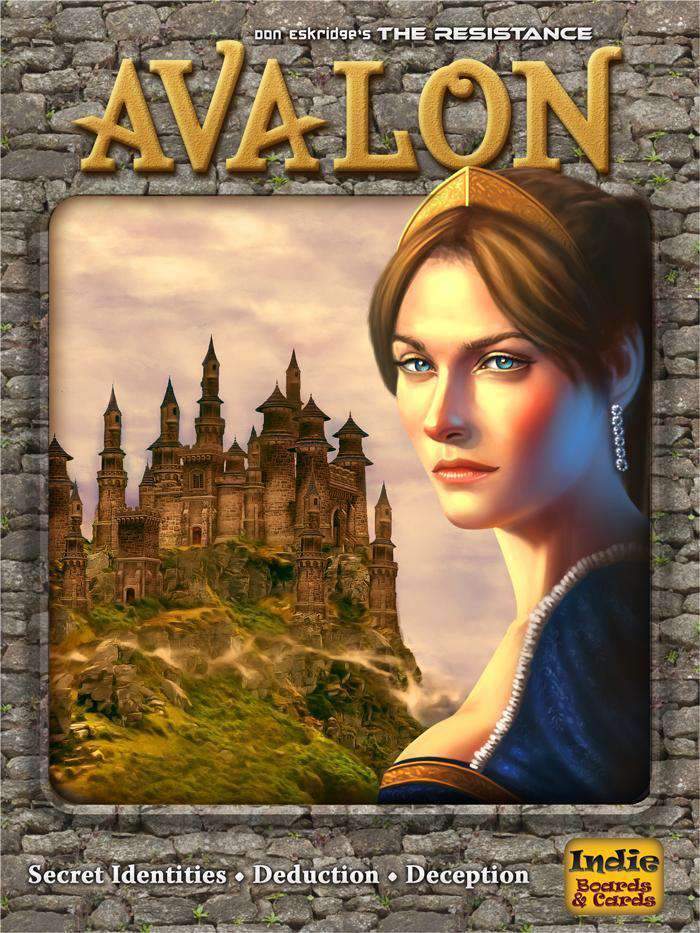
The Resistance: Avalon Review
The Social Deduction Game That Mastered the Art of Betrayal
Hook / First Impression
Somewhere between the first failed quest and the moment someone confidently accuses the wrong person of being a spy, you will realise that The Resistance: Avalon is unlike almost anything else you have played. It is a game where the pieces are people, the resource is trust, and the currency is deception. There is no board, no dice, no engine to build. There are only faces, words, votes, and the constant unsettling question: who here is lying?
Don Eskridge's 2012 social deduction game — a standalone reskin of his original The Resistance set in Arthurian legend — has spent over a decade at the top of its genre, and for good reason. It is mechanically elegant, psychologically rich, and capable of producing table moments that people quote for years. No game creates more genuine drama per minute of play.
Overview
The Resistance: Avalon is a social deduction game for 5–10 players in which a hidden minority of Minions of Mordred attempts to sabotage a series of Quests undertaken by the Loyal Servants of Arthur. Good players try to complete five Quests; evil players try to fail three of them. Neither side knows with certainty who is who — except for certain special roles that provide partial information and create layers of deduction, bluffing, and misdirection.
| At a glance | |
|---|---|
| Designer | Don Eskridge |
| Publisher | Indie Boards & Cards |
| Year | 2012 |
| Players | 5–10 |
| Play time | 30–60 minutes |
| Age | 13+ |
| Weight | Light-medium (BGG ~1.9/5) |
| Victory condition | Good: complete 3 quests. Evil: fail 3 quests or assassinate Merlin. |
Components & The Setting
The Setting: Players assume roles in the court of King Arthur — either loyal knights sworn to protect Camelot or treacherous agents of Mordred infiltrating the Round Table. The theme is decorative rather than integrated: quests do not have specific narratives, and the Arthurian lore exists primarily to provide atmospheric names for the special roles (Merlin, Percival, Mordred, Morgana, Oberon, the Assassin). The theme works beautifully nonetheless because it provides the right register — an atmosphere of courtly loyalty, hidden betrayal, and the stakes of a kingdom — that makes the deduction feel weighty rather than abstract. When someone accuses "Lancelot" of treachery at the Round Table, the fiction earns its keep.
Component quality is functional and nothing more. The box contains role cards (14 total, covering all player counts and all special roles), quest cards (each player receives a Success and Fail card), a Quest board tracking successes and failures across five quests, Vote tokens (Approve and Reject) for team nominations, and a handful of score markers. Everything is printed clearly and serves its purpose. Avalon is not a game you buy for its components — it is a game you buy for the experience its components enable, and by that standard it is exceptional.
How to Play
Setup: Role cards are dealt secretly according to player count. The ratio of Good to Evil players is fixed by the rules (always a comfortable majority of Good, e.g., 6 Good / 4 Evil at 10 players) but the identities within those factions are hidden. A short opening ritual takes place in darkness: all players close their eyes, Evil players open theirs to identify each other, Merlin opens eyes to see Evil, Percival opens eyes to identify Merlin (and possibly Morgana), then all eyes close again. When everyone opens their eyes, the game begins. Nobody speaks about what happened in the dark. The deception is already in motion before a word is said.
The game structure: Avalon is played over a series of Quests (up to five). For each Quest:
- Team selection: The current leader (rotating clockwise) proposes a team of a specific size (set by the Quest and player count). The leader announces who they want to send.
- Vote: All players simultaneously reveal Approve or Reject tokens. If the majority approves, the team goes on the Quest. If rejected, leadership passes to the next player. If five consecutive teams are rejected, Evil wins that Quest automatically — this prevents Good from infinite stalling.
- Quest resolution: Team members secretly submit a Success or Fail card (only Evil players may play Fail; Good players must always play Success). Cards are shuffled and revealed. Any single Fail card fails the Quest (at most player counts; some Quests at 7+ players require two Fails).
- Result: A token is placed on the Quest board — gold for Success, red for Failure. First side to three wins… unless Good wins three quests, at which point the Assassin gets one final action.
The Assassination: If Good completes three quests, the game is not yet over. The Assassin (an Evil role) now makes a final attempt to win by correctly identifying and "assassinating" Merlin. If the Assassin names Merlin correctly, Evil wins despite losing the quests. This single mechanic transforms the entire strategic calculus of the game: Merlin knows who is Evil and has been using that knowledge to subtly steer the good team toward correct decisions — but Merlin must hide their omniscience well enough to survive the endgame accusation.
Gameplay Feel
Pacing & Tension: Avalon's pacing is relentless. The voting phase is fast — tokens flip simultaneously, and the result is immediate. Discussion between nominations is where the game lives, and it can expand or contract based on the group. First-time players may spend twenty minutes arguing over a single team nomination; experienced players develop efficient shorthand and move faster. Either way, tension is constant and self-generating. A single failed quest shifts the entire social landscape: now someone on that mission was Evil, and everyone's previous statements about that person are suddenly re-evaluated through a different lens. The information density compounds every round.
Player Interaction: Maximum. Avalon is one of the most interactive games ever designed — every player is engaged every minute of every game, regardless of whose turn it is. There is no downtime, no waiting for your turn, no private engine to manage. The game is the conversation, and the conversation is continuous. Players who enjoy watching others think, who enjoy arguing from position, who enjoy the social performance of false certainty — Avalon is designed precisely for them.
Luck vs. Strategy Balance: The initial role assignment is random, but within the game itself there is almost no luck. Quest resolution is deterministic given player choices (Evil players choose whether to play Fail; Good players cannot play Fail). The only randomness is who receives which role at game start, and in a well-matched group even that is managed by the role distribution rules. Avalon rewards skill — not mechanical skill, but social skill: the ability to read people, construct convincing arguments, maintain a false narrative under cross-examination, and identify lies while telling them. This is a different kind of skill ceiling than most games, and it is extremely high.
Rule Overhead: Very low on paper, very high in practice. The rules fit on a single reference card. The basic game — no special roles — can be taught in five minutes. But Avalon's real complexity lives not in its rules but in its social dynamics, and those are infinitely subtle. A player who understands the rules perfectly on their first game will still be learning to play well after their fiftieth session. This gap between rules knowledge and genuine competence is part of what makes Avalon endlessly rewarding.
Mechanics Deep-Dive
The Information Asymmetry Engine
Avalon's core design achievement is its precise calibration of information asymmetry. Evil players know everything: they know who their allies are, they know Merlin's identity (unless Oberon is in play), and they know the Good team's plan whenever it is stated aloud. Good players know almost nothing: they only know their own role and whatever they can deduce from votes, quest outcomes, and conversation. Yet Good wins the majority of the time in balanced play. This paradox — the side with less information wins more often — is intentional and brilliantly constructed. Evil's knowledge advantage is offset by the team-selection dynamic: every time an Evil player approves a sabotaged team or rejects a clean one, they reveal information about themselves. Evil's power is real, but exercising it leaves traces.
The Special Roles
The optional special roles are the single biggest contributor to Avalon's longevity and depth. They transform the game from a straightforward trust-detection exercise into a multi-layered deduction puzzle where even certain knowledge can be weaponised against you.
- Merlin (Good) — knows the identities of all Evil players (except Mordred if present). Merlin's challenge is to guide the Good team without revealing that they have perfect information. Playing Merlin too obviously means the Assassin targets you correctly at the end. Playing too passively means Good loses on the quests. Merlin is the game's most demanding and rewarding role.
- Percival (Good) — knows which player is Merlin (or appears to be Merlin, if Morgana is in play). Percival's job is to protect and verify Merlin. When Morgana is present, Percival sees two players who might be Merlin and must work out which is real — while Morgana works to appear convincingly like the real Merlin.
- Mordred (Evil) — hidden from Merlin. Merlin does not know Mordred is Evil, which means Merlin may accidentally include Mordred in trusted teams. Mordred is a passive but devastating role: their power is simply not being visible to the one player who is supposed to catch everyone.
- Morgana (Evil) — appears as Merlin to Percival. Creates a false Merlin signal in Percival's information, complicating the one reliable verification chain Good has.
- Oberon (Evil) — unknown to the other Evil players (and does not know who they are). Oberon cannot coordinate with Evil, which weakens the Evil team's internal cohesion but adds unpredictability that can confuse the Good team's analysis.
- The Assassin (Evil) — no special setup ability, but holds the game-ending power to attempt to identify Merlin after Good completes three quests. The Assassin does not need deduction skills during the game; they need to be paying attention to information the rest of the Evil team gathers about which Good player seems unusually well-informed.
The Voting Meta
Team votes are the game's primary information source, and most of the strategic depth of Avalon lives in how players vote and why. A "logical" Good player always approves teams they believe are clean; a "strategic" Good player sometimes rejects them to gather information about how Evil reacts. An Evil player usually approves a team containing Evil allies; but sometimes approves a clean team to build credibility; but sometimes rejects a clean team to prevent a quest without a fail card being traceable to them. Every vote is both a game action and a piece of information, and interpreting vote patterns over multiple rounds is the core skill of high-level Avalon play.
Player Count Analysis
5 Players — Good, but thin. The minimum count works but feels constrained. With only 2 Evil players, a single read is often decisive. Games can be very short (25–30 minutes) and the strategic space is narrower. The roles Merlin and Morgana are the essential additions at this count to add depth. Functional, but Avalon plays better with more people.
6–7 Players — Very good. The game opens up considerably. The social dynamics become more complex, team nominations involve harder trade-offs, and the deduction space expands. Six players with Merlin, Percival, Morgana, and Mordred in the role pool is one of the game's most balanced and rewarding configurations. Team sizes grow larger, creating more uncertainty per quest.
8–9 Players — The sweet spot. Eight or nine players is where Avalon reaches its full potential. The table conversation is rich and multi-threaded; the Evil team has enough members to divide responsibilities (some building trust, some sabotaging); the Good team has enough players that identifying the minority becomes a genuine deduction challenge rather than a process of elimination. Quest team sizes mean that Evil can often get a spy onto a team with plausible cover. The game runs 45–60 minutes and every minute is active engagement.
10 Players — Excellent, with caveats. Ten players is Avalon at its most chaotic and most theatrical. The table conversation can become difficult to follow; quieter players may feel overwhelmed by louder voices. But for groups experienced with the game, ten players produces the highest drama and the most complex information management of any count. The 4 Evil / 6 Good split at ten players creates a genuinely challenging balance for both sides.
Replayability
Avalon has near-infinite replayability, with one important caveat. The game creates unique sessions not from card randomness or variable setup, but from the varying combination of roles, players, and the emergent deduction each game produces. No two games of Avalon play the same way because no two groups of people reason identically. Experienced groups develop shared metagames — tables where bluffing aggressively is the norm, tables where methodical vote analysis is valued, tables where emotional appeals carry weight. Avalon absorbs and reflects the social character of the group playing it.
The caveat: Avalon loses replayability with the same group as players reach very high experience levels and can predict each other's tells. Some groups find that after 50+ sessions together, familiar players become too readable — a characteristic bluff or verbal tic tips hands too consistently. The solution is new players (who revitalise the information landscape) or extended breaks between sessions. For mixed-experience groups and groups that regularly include new participants, Avalon is essentially inexhaustible.
Learning Curve
Ease of teaching: The basic rules of Avalon are genuinely simple and teachable in under ten minutes. The opening setup ritual (eyes closed, roles revealed in sequence) takes a first-time group two minutes with a clear facilitator. The quest structure — nominate, vote, go, resolve — is intuitive. Most first-time players are actively contributing to the game within one round. However: the social strategies and meta-level deduction that constitute the real game cannot be taught; they must be learned through play, failure, and observation.
Rulebook quality: Minimal but adequate. The rulebook is a single folded sheet. It covers the rules accurately without teaching strategy, which is appropriate — the rules are simple enough that a sheet suffices. The most common first-game confusion is around the Merlin/Percival/Morgana role sequence during setup; a single practice run of the opening ritual before the first game eliminates this. Players who want to understand special-role interactions should read the role cards carefully before play.
First-game experience: Variable by temperament. Players who enjoy conversation, social reading, and working under uncertainty tend to love Avalon from their first game. Players who prefer clearly defined decision spaces or who are uncomfortable with open-ended social pressure may find the first game disorienting. The most critical first-game factor is the presence of an experienced facilitator who can prompt productive discussion without revealing information, model the kinds of claims and arguments the game rewards, and manage the pace of conversation. A bad first experience is almost always attributable to poor facilitation rather than the game itself.
Who It's For
Social and conversational groups: Avalon is the defining game for groups who enjoy conversation, debate, and reading people. If your game night involves people who like to argue, who enjoy being right, who get animated when challenged, or who appreciate the performance of a well-told lie — Avalon is a perfect fit. It channels those social energies productively into a structured game.
Party game veterans looking for depth: Players who have exhausted lighter social games and want something with more strategic texture find Avalon a significant step up. The rules are as simple as any party game, but the skill ceiling is far higher than most hobbyist titles. The combination of accessibility and depth makes it one of the best "next games" for groups moving beyond Codenames or Dixit.
Large groups (8–10 players): Most games struggle at eight or more players. Avalon thrives. If you regularly host evenings with eight to ten people and want a game everyone can play simultaneously — rather than dividing into smaller groups — Avalon is one of the very few titles that is actually better with a full table.
Who it is not for: Players who are uncomfortable with social pressure, deception, or being accused of lying — even in a game context — will not enjoy Avalon and should not be pushed into it. Groups without strong communication or who are prone to table conflict outside the game should choose a lower-stakes alternative. Players who want solo strategy, resource management, or complex rules should look elsewhere: Avalon has essentially no mechanical complexity and will disappoint players who want a game to solve rather than a social experience to navigate.
Pros & Cons
What Avalon does exceptionally well:
- The highest drama-per-minute of any game in the hobby — every session produces moments that get quoted and replayed afterward.
- Scales beautifully from 5 to 10 players, with the experience actively improving as count increases.
- Merlin/Assassin structure creates a unique dual-layer strategic dynamic unmatched in the social deduction genre.
- Teaches in under ten minutes; plays in 30–60 minutes; fits in a coat pocket. Outstanding accessibility-to-depth ratio.
- Near-zero luck once roles are assigned — rewards genuine skill in social reading, argument construction, and information management.
- The most affordable great game in the hobby at under $20.
- Simultaneous engagement — no downtime, no waiting for your turn, every player involved every minute.
Where Avalon falls short:
- Requires a minimum of 5 players — small groups cannot play it at all.
- Uncomfortable for players who dislike being accused, lying, or social pressure. This is not a light casual game despite simple rules.
- Dominant personalities can distort games — a single forceful player can railroad votes or silence quieter voices in ways that break the game's information dynamics.
- Very experienced groups with fixed membership can develop a "solved" metagame that reduces freshness after many sessions together.
- The opening role-reveal ritual requires complete darkness and group discipline — challenging in bright environments or with players who peek.
- No solitaire option; requires a social group to play.
Expansions & Ecosystem
Avalon's expansion ecosystem is small but meaningful. The base game includes optional special roles that are themselves expansions in all but name: Merlin, Percival, Morgana, Mordred, Oberon, and the Assassin are included in the box and represent the full designed role set. No separate expansion purchase is required to access these — they are part of the base product.
There is a companion game, The Resistance (the original 2009 version Avalon is derived from), which uses the same core quest structure without the Arthurian setting or Merlin/Assassination mechanic. The Resistance is faster, slightly simpler, and contains a "The Plot Thickens" expansion deck that adds event cards modifying quest rules mid-game. These event cards can be mixed into Avalon sessions for experienced groups seeking fresh variables, though they introduce a light mechanical randomness that some groups prefer to avoid.
Value for Money
Avalon retails for approximately $15–$20 USD (€12–18 in Europe). It is arguably the best value-for-money purchase in the board game hobby. The production is minimal — cards, tokens, a small board — but the experience it delivers is matched only by games costing four to five times as much. A group that plays it once a month will extract more total memorable moments from this $18 box than from most $60–$80 games in the same period.
- Mixed social groups: Outstanding value. The low price point removes financial risk entirely, and the high ceiling means the game will not become obsolete as the group becomes more experienced.
- Large groups (8–10 players): Exceptional value. Games that work well at 8–10 players are rare and expensive. Avalon handles that count at a fraction of the price of alternatives.
- Gift purchase: An excellent choice for groups who enjoy party games and are ready for something with more depth. The price makes it a safe gift; the depth makes it one that will actually get played.
Accessibility
Color blindness: Minimal colour dependence. Good and Evil role cards are distinguishable by text and role names rather than colour alone. The quest board uses gold and red tokens that are also distinguished by shape (coin vs. shield depending on edition). Avalon is one of the more colour-blind-friendly games in the hobby.
Language dependence: Low. Card text is minimal — role cards have a short description; quest cards say "Success" and "Fail." The game is primarily verbal. Non-native speakers can play if they can follow and participate in table conversation in the game's language. Editions are available in multiple languages; non-English editions are widely accessible.
Cognitive accessibility: The rules are among the simplest of any mid-complexity game. Players with difficulty tracking complex rules can participate fully. However, the real cognitive demand of Avalon — holding multiple contradictory hypotheses in mind simultaneously, tracking vote histories across multiple rounds, managing the metagame of what others believe about you — is high and continuous. Players who find sustained social reasoning tiring will find Avalon more demanding than its simple rulebook suggests.
Hearing and speech accessibility: Avalon's game mechanics are entirely verbal — team nominations, votes, accusations, and arguments all happen through speech. Players who cannot easily participate in spoken group conversation are significantly disadvantaged, and adaptations (written notes, sign language with full-group comprehension) require group buy-in that changes the game's dynamics. Avalon is not readily accessible to players with significant hearing or speech challenges in its standard form.
Age range: The 13+ rating is accurate. The deception and social pressure elements require emotional maturity; younger players often struggle with the psychological demands of sustained deception. Mature teenagers who enjoy debate and social games adapt quickly. Avalon is not appropriate as a family game with young children.
Verdict
The Resistance: Avalon is the best social deduction game ever designed. That is not a casual claim — it is a considered one, based on the game's extraordinary combination of structural elegance, social depth, and session-to-session freshness. In a genre prone to producing games that are either too simple to sustain interest beyond a few sessions or too procedural to generate genuine drama, Avalon manages both simultaneously. Its rules are simple enough to teach in ten minutes and its skill ceiling is high enough to reward hundreds of sessions with the same group without resolution.
The Merlin/Assassin dual-layer structure is a design achievement that elevates social deduction from a genre of pure luck and personality into something closer to genuine strategy. Every piece of information you generate helps you; every piece of information you generate also helps your opponents. The game is in permanent tension, and that tension — between revealing yourself and concealing yourself, between trusting and verifying, between leading and misleading — is where all the best moments of game night live.
Buy it if: you regularly gather groups of six or more people who enjoy conversation, social performance, and the pleasure of being right. Avalon is the best purchase under $20 in the hobby — buy it without hesitation.
Skip it if: your group dislikes deception games, cannot meet the 5-player minimum, or finds social pressure uncomfortable. The game is not for everyone, and that is correct — it is for a specific kind of player and plays best for groups who embrace what it asks of them.
Score Breakdown
Enjoyed this review? Explore more honest board game reviews, score calculators, and strategy guides — everything you need for a better game night.
Browse All Reviews →